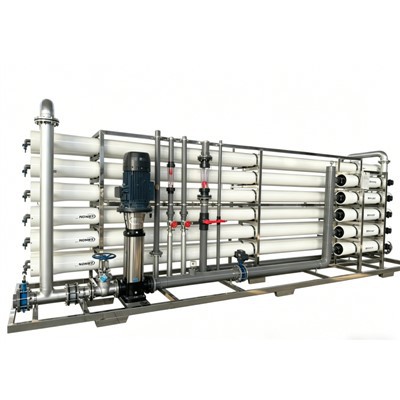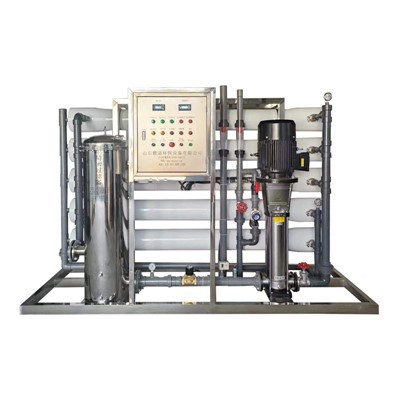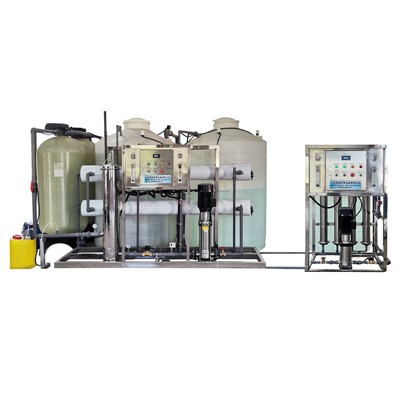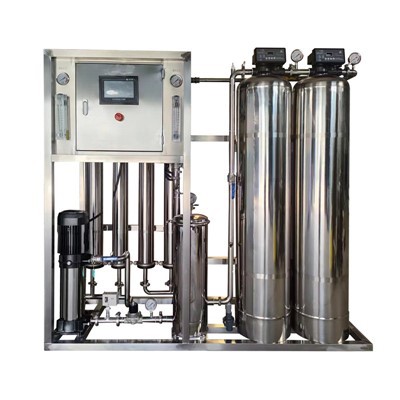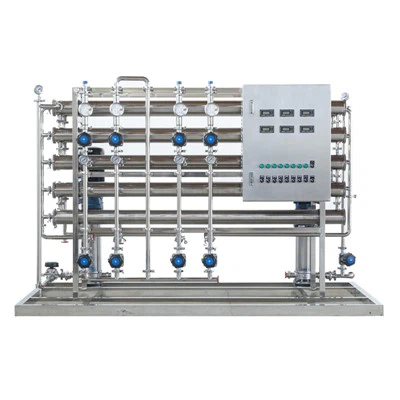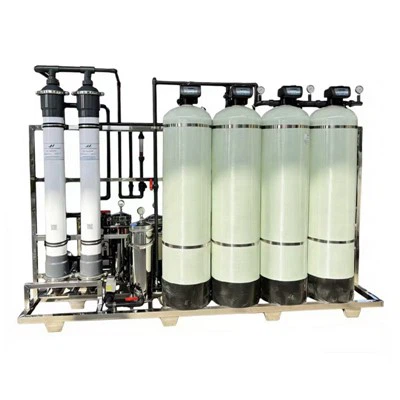
The acceptance standards for water treatment equipment parts are a crucial step in ensuring the efficient and stable operation of water treatment systems. They encompass multiple dimensions, aiming to control part quality from the source and prevent system failures or substandard water quality caused by part issues.
1. Technical Standards: Mandatory Requirements for Materials and Processes
● Material Compliance: Water treatment parts must be made of materials appropriate to the type of water being treated. For example, parts for treating drinking water must be made of food-grade stainless steel (such as 304 or 316L) to prevent heavy metal leaching; for treating corrosive wastewater, parts must be acid and alkali resistant, such as using PVDF or fiberglass. Material testing reports must be checked during acceptance to ensure compliance with national standards such as GB/T 1220 (stainless steel) or HG/T 21539 (fiberglass).
● Machining Accuracy: Dimensional tolerances of parts must be strictly controlled. For example, the surface roughness of the membrane housing's sealing surface should be ≤Ra0.8μm to ensure a tight seal with the membrane module; the thread accuracy of pipe connections must meet ISO 7-1 standards to prevent leakage during installation. During acceptance testing, random checks should be conducted using tools such as calipers and surface roughness testers.
● Structural Rationality: Component design must conform to hydraulic principles. For example, the opening ratio of the water distributor should be uniform (error ≤ 5%) to prevent localized short-circuiting of water flow; the inlet end of the reverse osmosis membrane housing should be equipped with a baffle plate to reduce the impact of water flow on the membrane element. The structural design can be verified during acceptance testing through water pressure testing or 3D scanning.
2. Water Treatment Accessory Acceptance Standards
● Performance Testing: Verification under simulated actual working conditions
● Pressure Resistance Test: Accessories must withstand 1.5 times the design pressure (e.g., if the design pressure is 1.0 MPa, the test pressure must reach 1.5 MPa) for 30 minutes without leakage or deformation. For example, pressure vessels must undergo a hydrostatic test according to ASME VIII standards; the pressure curve must be recorded and the deformation checked during acceptance.
● Flow Rate and Resistance Test: Filter cartridges, filters, and other accessories must be tested for pressure drop at the rated flow rate. For example, the pressure drop of a PP melt-blown filter cartridge should be ≤0.05 MPa at a flow rate of 10 m³/h; the transmembrane pressure difference of an ultrafiltration membrane module should be ≤0.03 MPa at a flux of 20 L/(m²·h). Actual measurements must be performed using a flow meter and pressure gauge during acceptance.
● Corrosion Resistance Test: Metal fittings must be immersed in a 5% NaCl solution for 72 hours, with a surface corrosion rate ≤0.01mm/year; non-metallic fittings (such as PVC pipes) must be immersed in a 20% H₂SO₄ solution for 24 hours, with a mass loss rate ≤1%. Samples must be cut for metallographic analysis or weighed for comparison during acceptance.
3. Water Treatment Accessory Acceptance Standards
● Safety Specifications: Dual Protection and Labeling
● Electrical Safety: Live-lined accessories (such as water pumps and control cabinets) must pass an IP55 protection rating test, with insulation resistance ≥1MΩ (500V DC). During acceptance testing, a megohmmeter and a spray system simulating a humid environment must be used.
● Mechanical Safety: Rotating parts (such as aerator impellers) must be equipped with protective covers with gaps ≤5mm; pressure vessels must be equipped with safety valves, and the set pressure must match the design pressure (error ≤±3%). During acceptance testing, the safety valve calibration report and protective cover strength test data must be verified.
● Labeling Integrity: Accessories must be labeled with key information such as model, specifications, production date, and pressure rating. The labeling must be wear-resistant (e.g., using laser engraving or etching). During acceptance testing, the label must be wiped 100 times with an alcohol swab to check for peeling or blurring.