
Product Overview
This industrial Electrodeionization (EDI) and Continuous Electrodeionization (CEDI) equipment provides continuous production of ultrapure water ranging from 15 to 18.2 MOhm·cm resistivity at 25°C. Positioned downstream of Reverse Osmosis (RO) systems, the process combines ion-exchange resins, selective ion-exchange membranes, and a direct current (DC) electric field. Ionic impurities are continuously driven out of the dilute chamber through the membranes into the concentrate stream, while the resin matrix regenerates electrochemically in real time—removing the operational risks, safety hazards, and downtime associated with chemical acid and caustic regeneration.
-
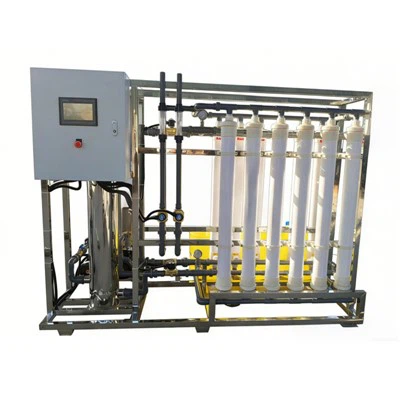
![Electrodeionization EDI System]() Electrodeionization EDI System· Chemical‑free regeneration, lower operating costs.view more
· 24/7 continuous ultra‑pure water production.
· Modular design, easy installation & low maintenance. -
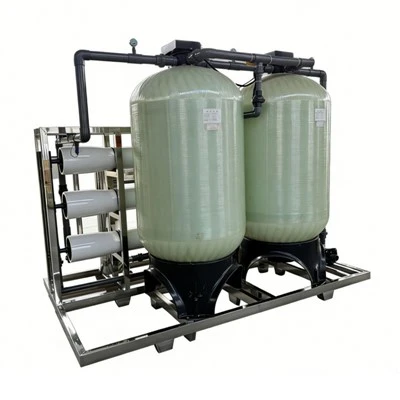
![Continuous Electrodeionization CEDI System]() Continuous Electrodeionization CEDI System· Chemical-free regeneration, ultra-pure water ≥18 MΩ·cm, cost-saving & eco-friendly.view more
· 24/7 continuous operation, auto-cleaning, low maintenance.
· Modular & quick install, adaptable to water sources, customizable. -
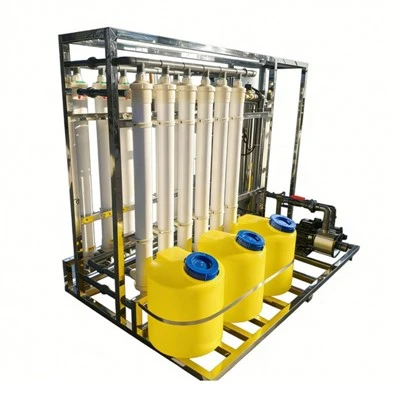
![RO and EDI Ultrapure Water System]() RO and EDI Ultrapure Water System· Integrated RO + EDI system delivers stable ultrapure water for industrial use.view more
· Certified quality & branded parts ensure reliable long-term operation.
· Auto-control, fast delivery & 24/7 support reduce your... -
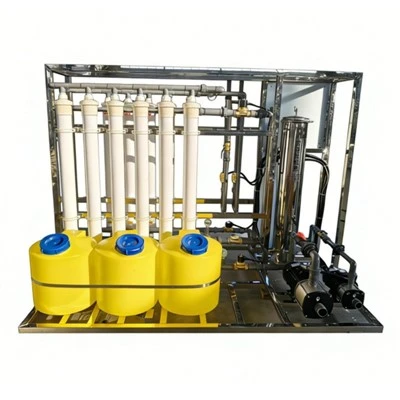
![Industrial EDI Ultrapure Water Equipment]() Industrial EDI Ultrapure Water Equipment· Continuous & stable ultrapure water output, fully automatic operation.view more
· No acid/alkali regeneration, eco-friendly & cost-effective.
· 99.99% salt rejection, high water recovery for long-term use. -
![RO EDI Integrated System]() RO EDI Integrated System· Zero chemical regeneration, cost-saving & eco-friendly.view more
· 24/7 stable ultrapure water, no downtime.
· Intelligent control & modular customization.


Continuous Chemical-Free Regeneration: Direct current continuously drives ionic contaminants across ion-exchange membranes into the concentrate stream, eliminating bulk chemical storage, neutralization systems, and acid-handling hazards.
Stable High-Resistivity Delivery: Maintains consistent effluent resistivity (>= 15.0 to 18.2 MOhm·cm) with continuous silica and boron rejection rates exceeding 95%.
Optimized Cell Stack Hydraulics: Plate-and-frame or spiral cell stack architectures utilize precision gasketing to prevent internal bypass, manage pressure drops, and ensure even fluid distribution across every cell pair.
Integrated DC Power Regulation: Equipped with dedicated silicon-controlled rectifier (SCR) or switch-mode power supplies featuring automated voltage and current adjustments responsive to feedwater conductivity shifts.
Technical Specifications
|
Parameter |
Standard Industrial Model (EDI-1000) |
High-Capacity Modular Unit (CEDI-3000) |
|
Rated Flow Rate (Per Module) |
1.0 to 1.5 m3/h (4.4 to 6.6 GPM) |
3.0 to 5.0 m3/h (13.2 to 22.0 GPM) |
|
Product Water Resistivity |
>= 15.0 to 18.2 MOhm·cm at 25°C |
>= 16.5 to 18.2 MOhm·cm at 25°C |
|
Silica (SiO2) Rejection |
>= 95% |
>= 98% |
|
Boron (B) Rejection |
>= 90% |
>= 95% |
|
Feedwater Conductivity |
< 10 uS/cm (RO Permeate) |
< 5 uS/cm (Double-Pass RO Permeate) |
|
Feedwater Hardness (CaCO3) |
< 1.0 ppm (Max limit: 0.1 ppm recommended) |
< 0.5 ppm |
|
Feedwater Silica (SiO2) |
< 1.0 ppm |
< 0.5 ppm |
|
Feedwater TOC |
< 0.5 ppm |
< 0.3 ppm |
|
Feedwater SDI (15-min) |
< 3.0 |
< 3.0 |
|
Feedwater Pressure Range |
0.2 to 0.4 MPa (29 to 58 psi) |
0.2 to 0.4 MPa (29 to 58 psi) |
|
Max Operating Pressure |
0.5 MPa (72.5 psi) |
0.5 MPa (72.5 psi) |
|
Operating Temperature |
5°C to 35°C |
5°C to 35°C |
|
DC Voltage / Current Range |
0 to 300 VDC / 0 to 10 A |
0 to 400 VDC / 0 to 15 A |
|
System Recovery Rate |
90% to 95% |
92% to 95% |
|
Wetted Materials |
PVDF, PP, EPDM, Ion-Exchange Resin/Membranes |
PVDF, 316L SS, EPDM, Ion-Exchange Resin/Membranes |
Power Generation: High-pressure subcritical and supercritical boiler feedwater makeup systems, preventing turbine blade scaling, silica deposition, and stress corrosion cracking.
Microelectronics & Semiconductor: Ultrapure water (UPW) polishing loops supplying wafer fabrication, flat-panel display manufacturing, and precision electronic component rinsing.
Pharmaceutical & Biotechnology: Purified Water (PW) and Water for Injection (WFI) pretreatment loops designed to comply with USP, EP, and JP guidelines.
Chemical Processing & Laboratory: High-purity process water for specialty chemical synthesis, analytical instrumentation feed, and high-purity catalyst preparation.

Customization

Skid Layout & Footprint
Single-stack or multi-stack parallel/series configurations engineered to fit specific plant room footprints, mounted on structural carbon steel (with chemical-resistant epoxy coating) or 304/316L stainless steel skids.
Instrumentation Options
Integration of brand-specific instrumentation (Rosemount, Georg Fischer, Endress+Hauser) for inline resistivity, flow, pressure, temperature, and pH monitoring.


Automation & Control
PLC integration (Siemens S7-1200/1500, Allen-Bradley ControlLogix/CompactLogix) featuring custom HMI touchscreens and support for Modbus TCP, Profinet, or Ethernet/IP plant network communication.
Electrical Compliance
Power supply configurations built for international industrial voltage inputs (380V, 415V, 480V, 600V; 50Hz/60Hz, 3-phase) with localized electrical panel certifications (CE, UL panel build standards available upon request).

Quality Assurance
Material Traceability
All ion-exchange membranes, resin lots, and wetted plastic components are supplied with complete material certificates of conformity and FDA/USP Class VI validation documentation.
Hydrostatic Pressure Testing
Every assembled cell stack and skid piping network undergoes hydrostatic testing at 1.5 x maximum design pressure for 30 minutes to verify mechanical integrity and gasket seal performance.
Factory Acceptance Testing (FAT)
Individual stacks are tested on a dedicated closed-loop water test bench to verify dry-run isolation, leakage resistance, voltage-current response curves, and baseline resistivity recovery before crating.
Manufacturing Standards
Fabricated in compliance with ISO 9001 quality management standards, with all pressure piping welded by ASME-certified technicians following strict Welding Procedure Specifications (WPS).
Engineering Submittals & Documentation: Complete technical submittal packages supplied upon order confirmation, including P&ID schematics, loop diagrams, I/O lists, GA drawings, and user O&M manuals.
Commissioning Guidance: On-site field service engineer dispatch or remote video-assisted startup support for dry-run verification, system flushing, and DC power calibration.
Operator Training: Structured technical briefings covering daily operating parameters, automated rinse cycles, Cleaning-in-Place (CIP) procedures, and troubleshooting resistivity deviations.
Spare Parts Management: Regional stocking of critical replacement spares, including manifold gasket kits, O-ring sets, and replacement cell modules to minimize facility downtime.
FAQ

Request a Quote
To receive a customized technical proposal, system sizing calculation, and commercial quotation tailored to your water treatment specifications, submit your project parameters directly to our engineering team.
We're well-known as one of the leading edi and cedi equipment manufacturers and suppliers in China, featured by quality products and good price. Please rest assured to buy bulk edi and cedi equipment made in China here from our factory. Customized orders are welcome.
Industrial Ultrapure Water System, deionized water system, RO EDI System