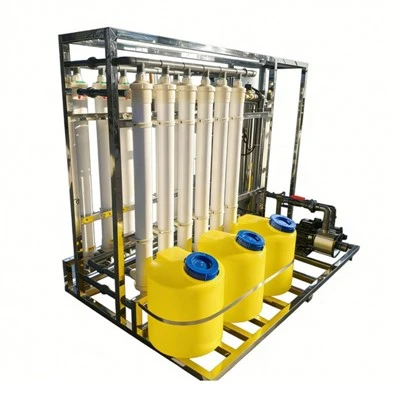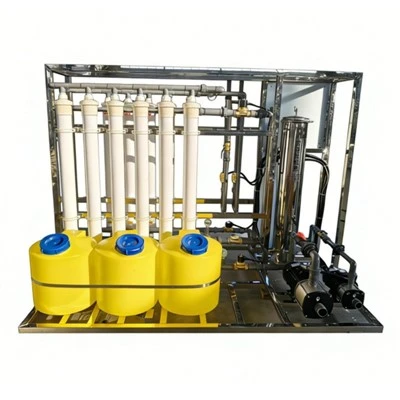


The Flocculant Dosing System is an automatic polymer preparation and feeding unit designed for municipal wastewater treatment, industrial effluent clarification, and sludge dewatering processes. It prepares polymer solutions from dry polyacrylamide (PAM) powder or liquid polymer emulsion and supplies the prepared solution to downstream dosing equipment.
The system uses a three-chamber tank structure consisting of preparation, maturation, and storage compartments. Each chamber performs a separate function, allowing polymer wetting, dissolution, hydration, and temporary storage to take place in sequence. A controlled powder feeder, dilution water inlet, mechanical agitators, and automatic level controls coordinate the preparation cycle.
Available configurations include dry powder feeding, liquid polymer feeding, and combined feeding arrangements. Tank materials, preparation capacity, electrical components, and control functions can be selected according to treatment plant requirements.
Key Features
Three-Chamber Preparation: Separate preparation, maturation, and storage compartments support staged polymer dissolution and solution handling.
Controlled Powder Feeding: A variable-speed screw feeder regulates dry polymer input. An enclosed hopper and optional heating arrangement help reduce moisture-related powder bridging.
Low-Speed Agitation: Independent agitators mix polymer solutions during preparation and maturation.
Automatic Operation: PLC-based controls coordinate water filling, powder feeding, mixing, and tank-level switching.
Multiple Material Options: Tank construction is available in SS304, SS316L, or polypropylene (PP), according to chemical compatibility and installation conditions.
Skid-Mounted Design: Integrated tanks, feeders, agitators, piping, and electrical controls simplify equipment installation.
Technical Specifications
|
Parameter |
FDS-2000 |
FDS-5000 |
|
Chamber Configuration |
3 Compartments |
3 Compartments |
|
Total Tank Volume |
2,000 L |
5,000 L |
|
Preparation Capacity |
500 L/h |
1,250 L/h |
|
Solution Concentration |
0.1–0.5% |
0.1–0.5% |
|
Powder Hopper Capacity |
60 L |
100 L |
|
Powder Feeder |
Variable-speed screw feeder |
Variable-speed screw feeder |
|
Agitator Quantity |
3 sets |
3 sets |
|
Agitator Motor Power |
0.75 kW/set |
1.5 kW/set |
|
Agitator Speed |
50–100 rpm |
50–100 rpm |
|
Tank Material |
SS304 / SS316L / PP |
SS304 / SS316L / PP |
|
Control System |
PLC + HMI |
PLC + HMI |
|
Power Supply |
380 V / 50 Hz, 3-phase |
380 V / 50 Hz, 3-phase |
|
Installation |
Skid-mounted |
Skid-mounted |
Applications
Municipal Wastewater Treatment: Polymer preparation for sludge conditioning, sedimentation, and sludge dewatering using belt filter presses, decanter centrifuges, and screw presses.
Industrial Wastewater Treatment: Flocculant preparation for suspended solids separation in textile dyeing, pulp and paper, and chemical manufacturing wastewater.
Mining and Mineral Processing: Polymer solution preparation for tailings thickening, coal washing water clarification, and mineral processing wastewater.
Drinking Water Treatment: Preparation of approved polymer flocculants for clarification processes, subject to applicable drinking water regulations and chemical approval.
Working Principle
The system operates through three sequential preparation stages:
1. Preparation: Dilution water enters the preparation chamber while dry polymer is introduced through the screw feeder. A wetting device distributes water across the powder to support initial dispersion and reduce undissolved agglomerates. The agitator mixes the solution at a controlled speed.
2. Maturation: The partially dissolved polymer solution moves into the maturation chamber through an overflow connection. Gentle agitation maintains solution uniformity during the hydration period.
3. Storage and Dosing: The prepared solution flows into the storage chamber. Level sensors provide signals to the PLC for automatic preparation-cycle control. Transfer or metering pumps deliver the polymer solution to downstream injection points.
Customization Options
combined feeding systems.
Tank Materials: SS304, SS316L, or PP construction.
Electrical Configuration: Customized voltage, frequency, PLC, HMI, and control cabinet.
Communication: 4–20 mA signals, Profibus-DP, or EtherNet/IP integration.
Outdoor Installation: Weatherproof electrical enclosures, tank insulation, and freeze-protection options.
FAQ
Q: Can the system handle both dry and liquid polymers?
A: Yes. Dry powder feeding is available as a standard configuration, while liquid polymer feeding and combined feeding can be supplied as optional arrangements.
Q: How is polymer concentration controlled?
A: Polymer concentration is adjusted through the relationship between polymer feed rate and dilution water flow. The PLC coordinates these inputs according to the configured preparation settings.
Q: How do I select the correct system capacity?
A: Selection depends on required polymer solution flow rate, target concentration, polymer type, daily operating hours, and downstream dosing demand.
Request a Quote
To select a suitable Flocculant Dosing System, please provide:
- Required preparation capacity (L/h)
- Polymer type and physical form
- Target solution concentration (%)
- Daily operating hours
- Preferred tank material
- Site voltage and frequency
- Installation environment
Hot Tags: flocculant dosing system, China flocculant dosing system manufacturers, suppliers, factory