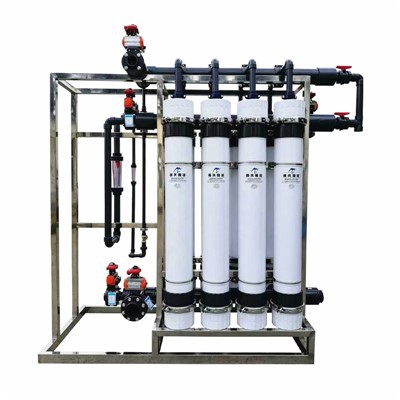


The Ozone Generator for Water Treatment produces ozone gas from oxygen or conditioned dry air using corona discharge technology. It is designed for municipal water treatment plants, industrial wastewater facilities, commercial water systems, and other applications requiring oxidation or supplementary disinfection.
The system uses a dielectric barrier discharge (DBD) assembly to convert oxygen molecules into ozone. Generated ozone is transferred into water through a Venturi injector, static mixer, or bubble diffuser, depending on the treatment system design.
The OZ-I-50G model features a high-frequency power supply, ozone generation chamber, cooling arrangement, and industrial control panel. Its modular configuration allows integration with oxygen supply equipment, ozone injection systems, contact tanks, and residual ozone destruction units.
Key Features
Corona Discharge Technology: Uses a high-voltage electric field and dielectric discharge assembly to generate ozone from oxygen-rich feed gas.
Ozone-Compatible Components: High-purity quartz dielectric components and selected ozone-compatible materials are used in the gas-contact assembly.
Cooling System: Water cooling removes heat generated during ozone production. Cooling requirements are specified according to the generator's rated output.
PLC Control: The control panel supports equipment operation, operating status monitoring, alarm indication, and electrical protection functions.
Modular Configuration: The generator can be integrated with external oxygen supply, gas-liquid mixing, and off-gas treatment equipment.
Technical Specifications
|
Parameter |
Specification |
|
Model |
OZ-I-50G |
|
Ozone Generation Technology |
Corona Discharge / DBD |
|
Ozone Output Capacity |
50 g/h model designation; rated output requires manufacturer test confirmation |
|
Feed Gas Source |
Oxygen or conditioned dry air |
|
Oxygen Purity |
≥93% for oxygen feed |
|
Feed Gas Dew Point |
≤ -40°C for conditioned oxygen feed |
|
Ozone Concentration |
Determined by feed gas and operating conditions; rated test value required |
|
Dielectric Material |
High-purity quartz glass |
|
Electrode Material |
316L stainless steel |
|
Cooling Method |
Water cooling |
|
Control System |
PLC control panel with HMI |
|
Cabinet Protection |
IP54 |
|
Enclosure Material |
Powder-coated carbon steel; 304/316 stainless steel optional |
|
Power Supply |
Industrial AC power; voltage and frequency configurable |
|
Communication |
Modbus RTU optional |
|
Output Control |
Adjustable ozone generation power |
|
Dimensions |
650 × 550 × 1350 mm |
|
Weight |
145 kg |
Applications
Municipal Drinking Water Treatment: Ozone is used for microbial inactivation and oxidation of taste- and odor-causing compounds. Bromate formation should be evaluated when treating water containing bromide.
Industrial Wastewater Treatment: Used to oxidize selected organic contaminants, including phenolic compounds and other ozone-reactive substances. Treatment performance depends on wastewater composition, pH, ozone dosage, and contact time.
Recirculating Aquaculture Systems: Ozone treatment supports microbial control and oxidation of dissolved organic compounds. It is commonly integrated with mechanical filtration, biological filtration, and residual ozone monitoring.
Swimming Pool Water Treatment: Used as a supplementary oxidation and disinfection process to reduce chloramine-related compounds. Appropriate residual disinfectant management remains necessary.
Industrial Cooling Water: Applied for microbial control and oxidation of selected organic contaminants in recirculating cooling systems. Separate water treatment measures are required for hardness and scale management.
Working Principle
The generator operates through dielectric barrier discharge:
Feed Gas Preparation: Oxygen or conditioned dry air enters the generation chamber after moisture and impurity control.
Electrical Discharge: A high-voltage alternating electric field is applied across the dielectric discharge gap.
Oxygen Dissociation: Energetic electrons split oxygen molecules (O₂) into individual oxygen atoms (O).
Ozone Formation: Free oxygen atoms combine with oxygen molecules to form ozone (O₃).
Water Injection: Generated ozone enters the water through an injector or diffuser and reacts with susceptible contaminants.
Unreacted ozone gradually decomposes, with oxygen as the final decomposition product.
Customization Options
Enclosure: Powder-coated carbon steel, 304 stainless steel, or 316 stainless steel cabinets.
Oxygen Supply: Optional PSA oxygen generation equipment and associated gas preparation components.
Electrical Configuration: 220V/60Hz or 415V/50Hz options, subject to electrical design.
Automation: PLC and HMI control with optional Modbus RTU or industrial communication interfaces.
Ozone Injection: Venturi injectors, static mixers, and bubble diffuser arrangements.
Off-Gas Treatment: Optional catalytic ozone destruction equipment for residual ozone in exhaust gas.
FAQ
Q: What feed gas is required?
A: Oxygen or conditioned dry air can be used. Oxygen purity, moisture content, and feed gas pressure must meet the generator's operating requirements. Oxygen feed is commonly used for higher-concentration ozone production.
Q: How is ozone output controlled?
A: Output can be adjusted through the electrical power control system where variable-output functionality is included. The available adjustment range depends on the installed power supply and generator design.
Q: What maintenance is required?
A: Maintenance includes inspecting electrical connections, cooling water circuits, gas filters, dielectric components, and ozone-contact connections. Inspection intervals should follow the equipment maintenance manual.
Q: Does the generator require an ozone destruction unit?
A: Off-gas treatment is recommended where residual ozone may be released from contact tanks or gas-liquid separation equipment. The required destruction capacity depends on the off-gas flow and ozone concentration.
Request a Quote
For equipment selection and system sizing, please provide:
- Target application and water treatment objective
- Water flow rate (m³/h)
- Required ozone dosage (mg/L) or ozone output (g/h)
- Available oxygen supply and purity
- Feed gas pressure and electrical supply
- Installation environment and cooling water conditions
Technical drawings, electrical diagrams, ozone output test records, and system configuration details can be provided according to the confirmed project requirements.
Hot Tags: ozone generator for water treatment, China ozone generator for water treatment manufacturers, suppliers, factory