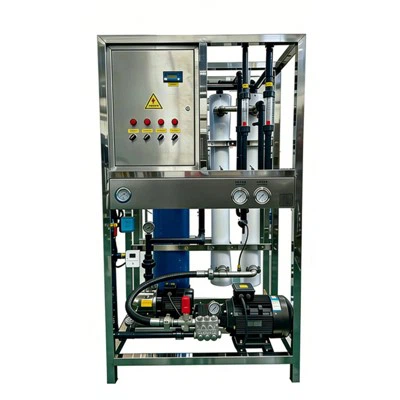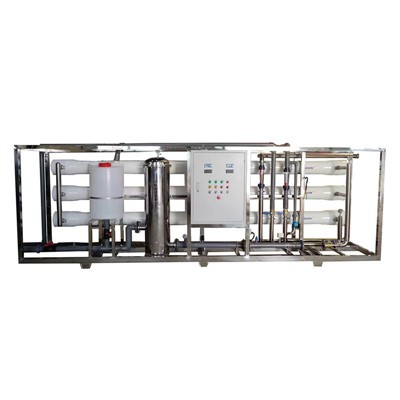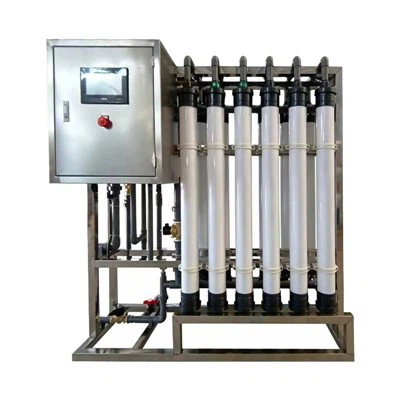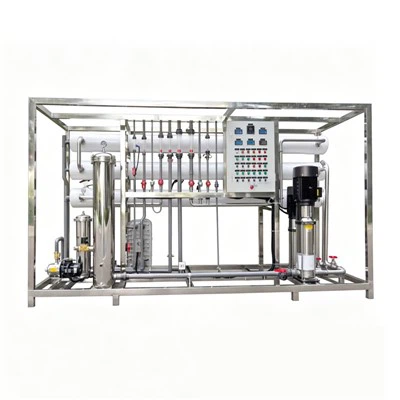


The Industrial UV Water Disinfection System uses ultraviolet-C radiation at 254 nm to inactivate bacteria, viruses, and other microorganisms in industrial and municipal water streams. Low-pressure high-output amalgam lamps are installed inside quartz sleeves within a stainless steel reactor chamber. Water flows through the reactor and receives UV exposure without the addition of chemical disinfectants.
The system is designed for inline installation in water treatment pipelines, including municipal water treatment, industrial process water, food processing, and wastewater reuse applications. Reactor material, lamp output, treatment capacity, and control functions are selected according to water quality and project requirements.
Key Features
Stainless Steel Reactor Chamber: AISI 304 or 316L stainless steel construction provides a corrosion-resistant enclosure for UV treatment. Electropolished internal surfaces are available for applications requiring controlled surface roughness.
Quartz Sleeve Protection: High-purity quartz sleeves isolate UV lamps from direct water contact while allowing UV-C radiation to pass into the treatment stream. Sleeve material and transmission characteristics are specified for 254 nm operation.
UV Intensity Monitoring: UV sensors monitor radiation intensity inside the reactor. The control system can provide alarms when measured intensity falls below configured operating limits.
Electronic Ballast Control: Electronic ballasts regulate lamp operation and provide functions such as lamp status monitoring, electrical protection, and individual lamp failure alarms.
Maintenance Access: The reactor structure provides access to lamps, quartz sleeves, and sealing components for inspection, cleaning, and replacement.
Working Principle
Water enters the reactor through the inlet flange and passes through the treatment chamber surrounding the UV lamp assemblies. UV-C radiation penetrates microbial cells and damages their nucleic acids, interfering with their ability to reproduce.
The effectiveness of treatment depends on UV dose, water flow rate, UV transmittance (UVT), suspended solids, and target microorganism sensitivity. Unlike chemical disinfection, UV treatment does not introduce chlorine-based disinfectants or provide a lasting chemical residual. Additional treatment may be required when downstream residual protection is necessary.
Technical Specifications
|
Parameter |
Specification |
|
Model |
YR-UVD-200T |
|
Equipment Type |
Inline UV Water Disinfection System |
|
UV Wavelength |
254 nm |
|
Lamp Technology |
Low-Pressure High-Output Amalgam UV-C |
|
Reactor Material |
AISI 304 / 316L Stainless Steel |
|
Quartz Sleeve |
High-Purity Synthetic Quartz |
|
Inlet / Outlet Connection |
DN200 / 8-inch Flange |
|
Reactor Surface Treatment |
Electropolishing |
|
Maximum Operating Pressure |
1.0 MPa |
|
Control Panel Protection |
IP54 |
|
UV Sensor Protection |
IP68 |
|
Control Interface |
UV Intensity Monitoring |
|
Communication |
Modbus RTU / RS485 |
|
Optional Communication |
Ethernet/IP |
|
Cleaning Configuration |
Manual / Automatic Quartz Wiping |
|
Installation Type |
Inline Pipeline Installation |
Applications
Municipal Water Treatment: UV treatment of filtered surface water and groundwater before distribution or subsequent treatment stages. Reactor sizing considers peak flow, UVT, and target microbial reduction.
Food and Beverage Processing: Microbial control in ingredient water and process water pipelines without adding chemical disinfectants that affect water taste or odor.
Industrial Process Water: Inline disinfection for manufacturing facilities requiring microbial control in circulating or supplied process water.
Aquaculture Systems: UV treatment of recirculating water in fish farms and hatcheries. Treatment capacity is matched to circulation flow and incoming water quality.
Industrial Wastewater Reuse: Tertiary disinfection of treated wastewater before reuse or discharge, provided suspended solids and UV transmittance meet the reactor design requirements.
Key Selection Factors
Selecting a UV disinfection system requires more than matching pipeline diameter. Buyers should provide the following information:
Flow Rate: Average and peak water flow in m³/h.
UV Transmittance: Minimum UVT at 254 nm, expressed as a percentage.
UV Dose: Required treatment dose in mJ/cm² based on the target microorganism and project standards.
Water Quality: Turbidity, suspended solids, iron, hardness, and operating temperature.
Installation Conditions: Pipeline diameter, flange standard, available space, and operating pressure.
Electrical Requirements: Supply voltage, phase, frequency, and control system interface.
These parameters determine reactor sizing, lamp configuration, and control requirements.
Customization Options
Available customization includes 304 or 316L stainless steel reactor construction, ANSI, DIN, and JIS flange standards, horizontal or vertical installation, and manual or automatic quartz sleeve cleaning. Alternative reactor materials, including Duplex 2205, 904L, and titanium, can be evaluated for specialized water conditions.
Control panels can incorporate PLC and HMI functions, UV intensity alarms, and communication interfaces for plant monitoring systems. Electrical specifications and automation requirements can be defined during project engineering.
FAQ
Q: How often should UV lamps be replaced?
A: Lamp replacement intervals depend on the manufacturer's rated service life and actual operating conditions. Lamp output should be monitored throughout operation, with replacement scheduled according to the equipment maintenance instructions.
Q: Does UV treatment leave a disinfectant residual?
A: No. UV disinfection does not provide residual protection in downstream pipelines. Additional disinfection may be required where residual microbial control is necessary.
Q: What water quality information is required before sizing?
A: The main parameters include UVT at 254 nm, turbidity, TSS, iron, hardness, temperature, and maximum flow rate.
Q: How is UV disinfection performance verified?
A: Performance evaluation requires the specified UV dose, operating flow, water UVT, and applicable reactor validation data.
Request a Quote
To receive a technical proposal and equipment configuration, provide your average and peak flow rate, minimum UVT, target UV dose or microbial reduction requirement, water quality analysis, pipeline connection standard, installation conditions, and electrical supply requirements. CAD drawings, equipment dimensions, and technical documentation can be provided for project evaluation.
Hot Tags: uv water disinfection system, China uv water disinfection system manufacturers, suppliers, factory