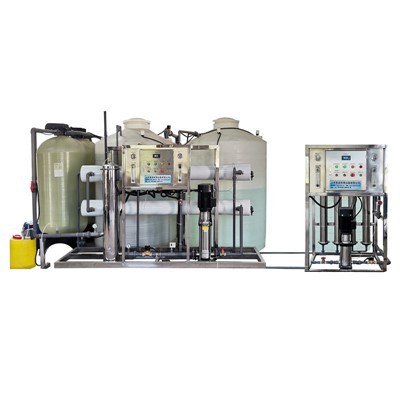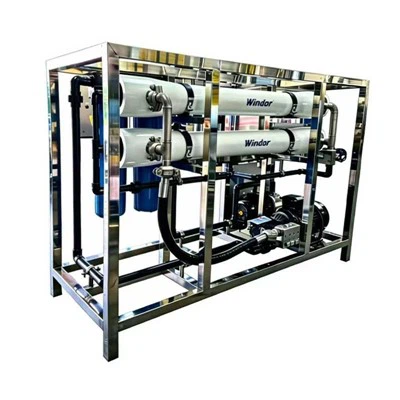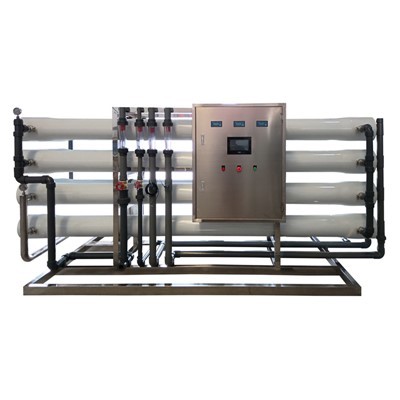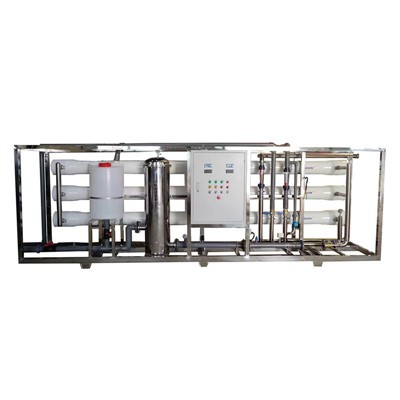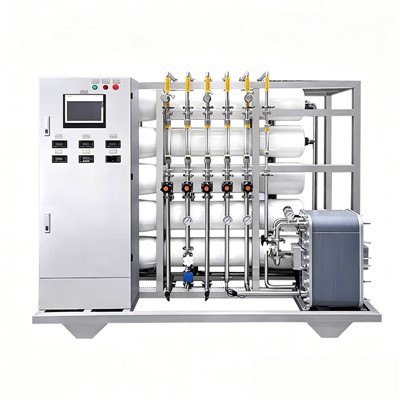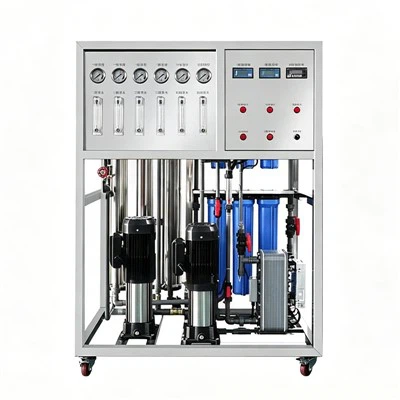

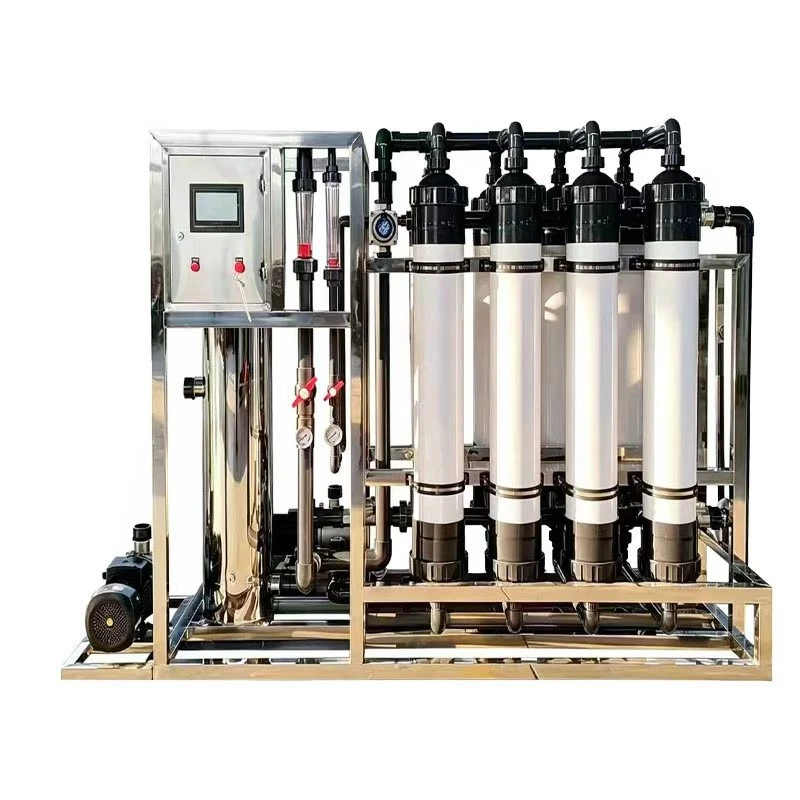
An industrial automatic water softener uses sodium-form strong acid cation exchange resin to remove calcium (Ca²⁺) and magnesium (Mg²⁺) ions, reducing feed water total hardness to below 0.03 mmol/L. The system incorporates fully automated control valve assemblies to manage service, backwash, brine draw, slow rinse, and fast rinse cycles without operator intervention. Available in single-tank, duplex alternating, and multi-tank configurations, it provides continuous, scale-free water for critical industrial processes and utility systems.
Key Features
Continuous Soft Water Supply: Duplex alternating configurations route water through one duty tank while the second regenerates or remains on standby, eliminating process downtime.
Volumetric Regeneration Efficiency: High-precision flow sensors trigger regeneration based on actual volume treated, reducing salt and wastewater discharge compared to timer-based models.
Heavy-Duty Pressure Vessels: Filament-wound FRP tanks with seamless PE liners ensure long-term pressure integrity; optional SS304 or SS316 vessels handle elevated temperature or pressure conditions.
Corrosion-Resistant Control Valves: Ceramic disc or motorized diaphragm valves withstand scaling, chemical exposure, and continuous cycle wear without internal leakage.
Automated Brine System: Integrated salt storage tanks with auto-refill valves maintain precise NaCl solution saturation for consistent resin regeneration.
Technical Specifications
|
Parameter |
Specification Range |
|
Inlet Water Hardness |
≤6.0 mmol/L (≤600 mg/L as CaCO3) |
|
Effluent Hardness |
≤0.03 mmol/L |
|
Operating Flow Rate |
2.0–50.0 m³/h (per single unit) |
|
Working Pressure |
0.20–0.60 MPa (29–87 PSI) |
|
Operating Temperature |
5–50°C (41–122°F) |
|
Control Power Supply |
AC 110V / 220V ±10%, 50/60Hz |
|
Regeneration Mode |
Automatic Volumetric Meter / Time-Clock Override |
|
Resin Type |
Food-grade / Industrial strong acid styrene cation resin |
|
Connection Standard |
Flanged or Threaded (ANSI, DIN, or ISO compliance) |
Applications
Boiler Feedwater Pretreatment: Eliminates hard water scale deposits on boiler tube surfaces, preserving heat transfer efficiency and preventing thermal stress cracking.
RO System Protection: Serves as pretreatment upstream of Reverse Osmosis (RO) units to reduce membrane scaling and lengthen chemical cleaning intervals.
HVAC & Cooling Towers: Controls makeup water hardness, preventing mineral precipitation inside heat exchangers, condensers, and chillers.
Process Manufacturing: Delivers high-purity rinse water for textile dyeing, metal finishing, automotive painting, and food processing operations.
Working Principle
The system utilizes synthetic cation exchange resin loaded with sodium ions (Na⁺) to exchange hardness-causing minerals through a five-stage automated cycle:
Service: Hard raw water passes down through the resin bed. Calcium and magnesium ions bind to resin sites, releasing sodium ions into the treated stream.
Backwash: Upward fluid flow expands and fluidizes the resin bed, flushing out trapped suspended solids and re-classifying resin beads.
Brine Injection & Slow Rinse: A concentrated NaCl solution passes through the bed, displacing accumulated calcium and magnesium ions to restore resin capacity.
Fast Rinse: Fresh feed water flushes residual brine and mineral byproducts out of the vessel to prevent salt carryover into downstream systems.
Brine Tank Refill: Softened water fills the brine tank to dissolve sodium chloride for the subsequent regeneration cycle.
Customization Options
Vessel & Piping Materials: Upgrade standard FRP vessels and UPVC manifolds to SS304/SS316 stainless steel or Schedule 80 PVC/CPVC.
Skid Mounting: Pre-piped, pre-wired carbon steel or stainless steel structural skids with integrated sample valves and isolation manifolds.
Industrial PLC Controls: Siemens or Allen-Bradley PLC panels featuring color touchscreens (HMI) with Modbus, Profibus, or Ethernet/IP protocols for plant SCADA integration.
Duplex & Triplex Architectures: Dual-parallel, twin-alternating, or multi-unit configurations for high-volume or redundant flow requirements.
FAQ
Q: What is the main operational difference between single-tank and duplex softeners?
A: Single-tank units pause soft water output or pass hard bypass water during regeneration. Duplex alternating systems switch instantly to the second tank, guaranteeing uninterrupted 24/7 continuous service.
Q: How much salt does the system consume per regeneration cycle?
A: Salt consumption averages 100–160 g of industrial NaCl per liter of resin, depending on feed water hardness and regeneration efficiency settings.
Q: What pre-treatment equipment is required prior to the water softener?
A: Raw water containing suspended solids above 5 μm, turbidity, iron, or free chlorine requires pre-filtration (multimedia or activated carbon) to avoid resin fouling and chemical oxidation.
Q: What is the expected operational lifespan of the ion exchange resin?
A: High-capacity cation resin typically maintains performance for 5 to 8 years under standard operational conditions with adequate pre-filtration.
Request a Quote
To receive a tailored technical datasheet and commercial proposal, please submit the following operational parameters to our engineering team:
Required hourly flow rate (nominal and peak m³/h or GPM)
Feed water source and total hardness level (ppm / mg/L as CaCO3)
Continuous operational hours per day (24/7 continuous or batch operation)
Preferred vessel material and control integration requirements
Hot Tags: industrial automatic water softener, China industrial automatic water softener manufacturers, suppliers, factory