
Industrial Chemical Dosing Equipment & Skid Systems
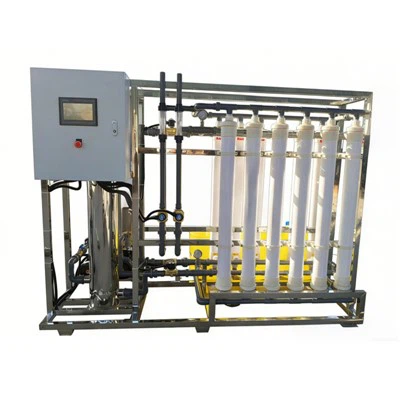
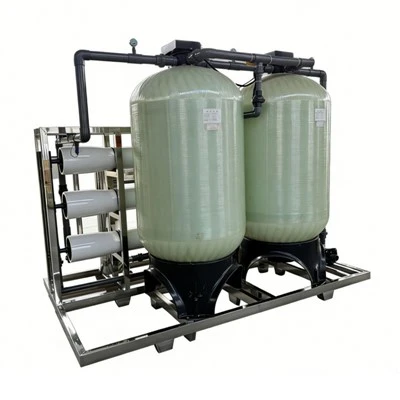
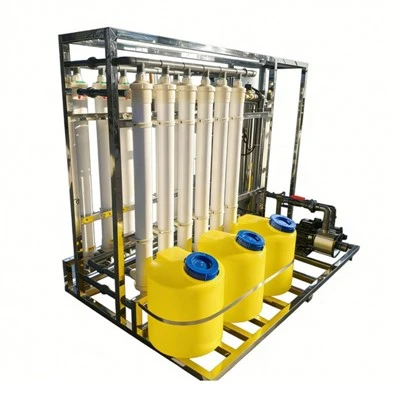
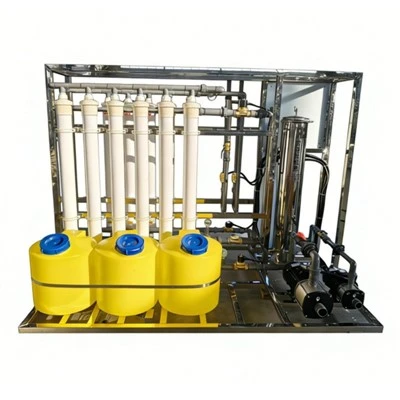
Industrial chemical dosing systems regulate the precise injection of liquid additives into pressurized or open process streams. These pre-assembled skid packages integrate chemical storage, metering pumps, instrumentation, and piping manifolds into a single footprint. Designed for continuous chemical injection, these systems eliminate manual dosing errors, maintain strict chemical balance, and protect downstream equipment from corrosion, scaling, or biological fouling in demanding industrial environments.
-
![PH Adjustment Dosing System]() PH Adjustment Dosing SystemA pH Adjustment Dosing System is an integrated chemical injection unit used to control the acidity or alkalinity of industrial process water and wastewater. It measures the liquid's pH value and automatically adjusts acid or alkali...view more
-
![Flocculant Dosing System]() Flocculant Dosing SystemThe Flocculant Dosing System is an automatic polymer preparation and feeding unit designed for municipal wastewater treatment, industrial effluent clarification, and sludge dewatering processes. It prepares polymer solutions from dry...view more
-
![Coagulant Dosing System]() Coagulant Dosing SystemA Coagulant Dosing System is a skid-mounted chemical injection package designed to store, meter, and inject liquid coagulants into municipal and industrial water treatment processes. Common dosing chemicals include polyaluminum chloride...view more
-
![Alkali Dosing System]() Alkali Dosing SystemAn Alkali Dosing System is a skid-mounted chemical injection package designed to deliver controlled quantities of alkaline solutions into industrial water and process streams. It is commonly used for pH adjustment, acidic wastewater...view more
-
![Acid Dosing System]() Acid Dosing SystemAn Acid Dosing System is an integrated, skid-mounted chemical injection package engineered for precise pH adjustment and process flow conditioning in industrial water and chemical treatment systems. The system integrates chemical...view more
-
![Antiscalant Dosing System]() Antiscalant Dosing SystemAn Antiscalant Dosing System is a skid-mounted chemical injection unit used in reverse osmosis (RO) water treatment plants. It delivers controlled quantities of antiscalant into RO feedwater to inhibit mineral scale formation on...view more


Modular Skid Design
Structural carbon steel or stainless steel frames, epoxy-coated or passivated, grouping pumps, tanks, and valves for single-point utility and piping connection.
High-Precision Metering Pumps
Positive displacement diaphragm or plunger pumps delivering volumetric accuracy within ±1% under stable operating conditions.
Corrosion-Resistant Wetted Materials
Material pairings including PVDF, PVC, 316L stainless steel, and PTFE diaphragms selected according to chemical aggressiveness (acids, caustics, polymers, oxidizers).
Integrated Safety & Calibration Accessories
Factory-installed pressure relief valves, back-pressure valves, pulsation dampeners, calibration cylinders, and dual-isolation ball valves.
Local & Remote Control Panels
NEMA/IP-rated electrical enclosures featuring motor starters, stroke controllers, low-level tank switches, and 4-20mA or digital communication inputs for SCADA integration.
Product Types
Standard Wall-Mounted Dosing Units
Compact configurations combining a single solenoid or motor-driven diaphragm pump with a back-board, ideal for low-flow water treatment and limited floor space.
Single-Pump Skid Systems
Complete floor-mounted skids featuring one storage tank, one primary pump, and complete valving manifolds for continuous duty.
Duplex / Multi-Pump Dosing Skids
Dual-pump assemblies (duty/standby configuration) with automatic switchover capability, ensuring uninterrupted chemical injection during maintenance or primary pump failure.
Custom Engineered Injection Packages
Heavy-duty configurations built to client piping and instrumentation diagrams (P&ID), featuring redundant metering heads, heat tracing, explosion-proof motors, and specialized alloy piping.
Chemical dosing relies on positive displacement fluid transfer. The cycle operates as follows:
Storage & Suction: Chemical media is gravity-fed or drawn from a polyethylene (PE) or stainless steel storage tank through an inlet strainer.
Volumetric Displacement: The pump drive mechanism (solenoid, eccentric cam, or crank gear) reciprocates a piston or flexes a PTFE diaphragm inside the hydraulic head.
Valving & Discharge: Inlet check valves close while discharge check valves open, forcing a fixed volume of chemical past the calibration column and pressure relief valve into the injection point.
Back-Pressure & Regulation: A spring-loaded back-pressure valve maintains constant downstream resistance, preventing siphonage and ensuring linear flow output regardless of main process pressure fluctuations.

Technical Specifications
|
Technical Parameter |
Standard Range / Configuration Options |
|
Flow Rate Capacity |
0.1 L/h to 5,000 L/h per pump head |
|
Max Discharge Pressure |
Up to 100 bar (configurable by pump type) |
|
Pump Driving Mechanism |
Solenoid-driven, motor-driven mechanical diaphragm, hydraulic diaphragm, plunger |
|
Tank Capacity |
50 L to 5,000 L (HDPE, XLPE, or 316L SS) |
|
Wetted Head Materials |
PVC, PVDF, PP, 316L Stainless Steel, Alloy 20, Hastelloy |
|
Diaphragm Material |
PTFE face with EPDM/Nitrile backing |
|
Control Interface |
Manual stroke length adjustment, digital frequency control, 4–20 mA, Modbus RTU |
|
Power Supply |
110V / 220V (Single Phase), 380V / 415V (Three Phase, 50/60 Hz) |
|
Enclosure Rating |
IP55, IP65, NEMA 4X (Ex-proof ATEX / Class I Div 2 available) |
Applications
Municipal Water Treatment
Disinfection via sodium hypochlorite, coagulation via polyaluminium chloride (PAC), and pH adjustment using sulfuric acid or sodium hydroxide.
01
Industrial Boiler Water Treatment
Oxygen scavenger injection (sodium sulfite/hydrazine) and phosphate dosing to prevent scaling and pitting.
02
Cooling Tower Management
Biocide and scale inhibitor injection controlled by conductivity and ORP sensors.
03
Oil & Gas Field Operations
Demulsifier, corrosion inhibitor, and scale inhibitor injection into high-pressure gathering lines and wellheads.
04
Reverse Osmosis (RO) Systems
Antiscalant and metabisulfite (SMBS) dosing to prevent membrane fouling and chlorine degradation.
05
Key Selection Factors
To specify the correct dosing system, engineering teams must evaluate:
Chemical Properties: Viscosity, specific gravity, vapor pressure, temperature, and chemical reactivity dictate wetted material selection (e.g., PVDF vs. PVC).
Dosing Rate & Pressure: Maximum required injection volume per hour and the operating pressure of the target pipeline determine pump displacement and motor power.
Duty Cycle & Redundancy: Continuous 24/7 operation typically requires duty/standby dual-pump skids with automatic switchover controllers.
Control Integration: Determine whether manual local control suffices or if external 4-20mA / pulse signals from flow meters and pH controllers are required.
Environmental Conditions: Indoor installation versus outdoor corrosive or explosive atmospheres requiring weatherproof (IP65) or explosion-proof (Exd IIBT4) certifications.
FAQ

Request a Quote
To receive a prompt, technically accurate proposal, please submit your engineering parameters using the checklist below:
Chemical Name & Concentration: (e.g., Sodium Hypochlorite $12\%$)
Required Flow Rate: (L/h or GPH)
System Operating Pressure: (bar or psi)
Tank Volume Requirements: (L)
Power Supply Specifications: (Voltage / Phase / Frequency)
Special Compliance or Material Requirements: (e.g., ATEX, NACE, FDA-compliant seals)
We're well-known as one of the leading chemical dosing equipment manufacturers and suppliers in China, featured by quality products and good price. Please rest assured to buy bulk chemical dosing equipment made in China here from our factory. Customized orders are welcome.