
Product Overview
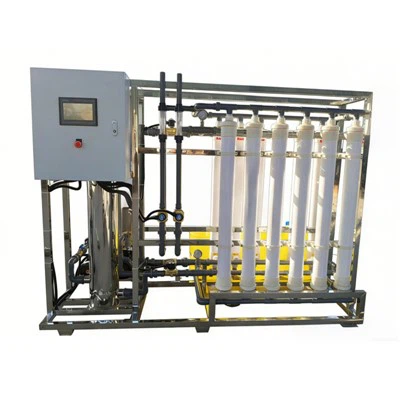
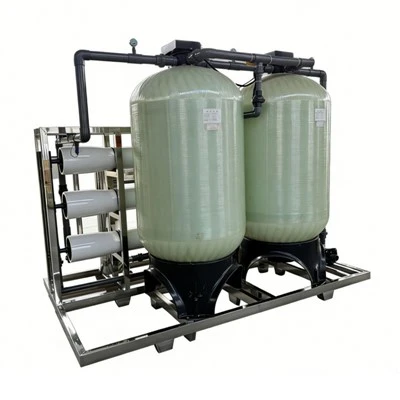
Industrial Ion Exchange (IX) equipment removes dissolved ionic contaminants from process water, boiler make-up streams, and industrial effluents through reversible chemical reactions on functionalized polymer resin beads. Configured as twin-bed, mixed-bed, or pre-treated continuous polishing skids, these systems achieve treated effluent quality down to 0.055 uS/cm (18.2 MOhm·cm resistivity).
Engineered for continuous heavy-duty industrial operation, each skid integrates pressure vessels built to ASME/PED standards, corrosion-resistant process piping (Schedule 80 UPVC, CPVC, or lined carbon steel), pneumatic/electric actuator valve nodes, and automated acid/caustic or brine regeneration subsystems.
-
![Ion Exchange Water Treatment Unit]() Ion Exchange Water Treatment Unit· Fully automatic ion exchange, stable scale removal.view more
· Industrial certified quality, compliant softened water.
· Customizable for all scenarios, global after-sales. -
![Ion Exchange Water Softening System]() Ion Exchange Water Softening System· Fully automatic ion exchange water softening, stable operation with unattended whole process.view more
· Wide range of 500L-1000m³/h, covering all scenarios for household and industrial use.
· CE & ISO certified with strict... -
![Ion Exchange Water Purification System]() Ion Exchange Water Purification System· Stable & automatic water output, consistent qualified water quality.view more
· Ultrapure water available, fits high-standard industrial production.
· Internationally certified, factory direct with full after-sales service. -
![Industrial Demineralizing Water Softener]() Industrial Demineralizing Water Softener• Dual‑pass ultrapure water, 99.5% salt rejection, stable output with zero fluctuation.view more
• Continuous operation, acid/alkali‑free regeneration, eco‑friendly and cost‑saving.
• Fully customizable parameters, suitable for... -
![Industrial Water Softener]() Industrial Water Softener· Fully automatic intelligent water softener with APP remote control, hassle-free operation.view more
· Powerful anti-scaling, extend equipment life and reduce operating costs.
· Customizable configuration for various...


Multi-Bed & Mixed-Bed Configurations: Operates in co-current, counter-current, or packed-bed regeneration modes to minimize chemical consumption and rinse water discharge volume.
Heavy-Duty Wetted Materials: Internal vessel rubber linings and polymer/stainless steel (SS304/SS316L) piping networks withstand concentrated hydrochloric acid (HCl), sodium hydroxide (NaOH), and sulfuric acid (H2SO4).
Automated Regeneration Sequencing: PLC-controlled regeneration loops triggered by inline resistivity/conductivity meters, totalized throughput, or timed intervals, eliminating manual valve manipulation.
Precision Resin Retention Hubs: High-density polyethylene (HDPE) or stainless steel wedge-wire distribution headers prevent resin media attrition and media loss during high-rate backwash cycles.
Technical Specifications
|
Parameter |
Specification Range |
Compliance / Design Standard |
|
Design Flow Rate |
2.0 m3/h - 200 m3/h (per skid train) |
Scalable for multi-train parallel operation |
|
Pressure Vessel Material |
Carbon Steel with Ebonite/Rubber Lining, SS304, SS316L, FRP |
ASME Section X / PED 2014/68/EU compliant |
|
Resin Matrix Types |
Strong Acid Cation (SAC), Strong Base Anion (SBA), Weak Acid/Base |
Gel or Macroporous structure (Purolite/Dow/AmberLite equivalent) |
|
Design Operating Pressure |
0.6 MPa - 1.0 MPa (6 - 10 bar) |
Factory hydro-tested at 1.5x MAWP |
|
Operating Temperature |
5°C - 45°C (Standard), up to 80°C (Special hot water designs) |
Dependent on polymeric resin limits |
|
Regeneration Agents |
HCl (31%), H2SO4 (98%), NaOH (30%), NaCl (10% - 25%) |
Automated chemical metering & dilution skids |
|
Control Architecture |
Siemens S7-1200 / Allen-Bradley Micro850 PLC |
10-inch HMI Touch Screen, Modbus/Profinet communication |
|
Power Supply |
380V/415V, 50/60Hz, 3-Phase |
Custom industrial voltages available upon request |
Power Generation: High-purity boiler feed water demineralization to suppress mineral scaling and prevent turbine blade silica deposition.
Chemical & Petrochemical Processing: Process stream deionization, catalyst recovery, and aggressive acid purification loops.
Microelectronics & Semiconductor: High-purity water polishing loops operating downstream of RO and EDI units.
Metallurgy & Electroplating: Heavy-duty recovery of valuable transition metals (nickel, copper, chromium) from rinse lines and closed-loop wastewater recycling.
Food & Beverage: Sugar juice de-ashing, decolorization, and high-purity process water conditioning.

Customization
Engineered-to-Order (ETO) execution adapts directly to specific feed water analysis reports and plant footprints:

Vessel Sizing & Geometry
Shell diameter and straight-shell heights engineered based on Empty Bed Contact Time (EBCT) kinetics. Redundant duty/standby dual trains ensure uncompromised 24/7 industrial continuity.
Valves & Piping Nodes
Pneumatic diaphragm valves with feedback limit switches or electric-actuated butterfly valves selected based on cycle frequency and chemical resistance requirements.


Chemical Handling Skids
Bulk chemical storage integration, automated day-tanks, metering pump skids, and inline dilution mixing units.
Instrumentation Packages
Redundant conductivity/resistivity transmitters, magnetic flow meters, pH/ORP sensors, and differential pressure gauges across individual resin beds.


Welding & Fabrication Integrity: All pressure containment and structural welds performed by certified welders (ASME Section IX / EN ISO 9606) using GTAW/SMAW procedures, supported by mandatory visual check and radiographic/dye-penetrant non-destructive testing (NDT).
Hydrostatic & Pressure Testing: Every pressure vessel undergoes hydrostatic testing at 1.5 times the maximum allowable working pressure for a minimum dwell time of 30 minutes.
Electrical & PLC Simulation: Control panels built to UL508A / IEC 60204-1 standards; complete I/O simulation and dry-run execution of PLC automation logic before dispatch.
Material Traceability: Mill Test Certificates (MTC) and positive material identification (PMI) documentation provided for all wetted metallic components and pressure vessels.
After-sales Technical Support
Commissioning Supervision
On-site or remote engineering support for mechanical tie-ins, resin loading, initial hydraulic backwashing, chemical conditioning, and PLC integration.
Spare Parts Availability
Strategic stock of critical wear components including vessel internal distributor nozzles, pneumatic valve diaphragm kits, solenoid valves, and top-up ion exchange resin batches.
Comprehensive Documentation
Complete turnover package including P&IDs, electrical schematics, PLC source code, instrument calibration certificates, and detailed O&M manuals.
FAQ

Request a Quote
To receive a detailed engineering proposal, commercial quotation, and system sizing calculation tailored to your plant requirements, please submit the following data:
Raw Water Quality Analysis: Full mineral breakdown, TDS, temperature, turbidity.
Target Treated Water Specifications: Required conductivity/resistivity, design flow rate.
Operational Regime: Continuous 24/7 vs. batch operation; availability of regeneration utilities.
Design Code & Certification Preferences: ASME, PED, CE, UL.
We're well-known as one of the leading ion exchange equipment manufacturers and suppliers in China, featured by quality products and good price. Please rest assured to buy bulk ion exchange equipment made in China here from our factory. Customized orders are welcome.
Industrial Demineralizing Water Softener, Water Softener, ion exchange equipment