
Product Overview
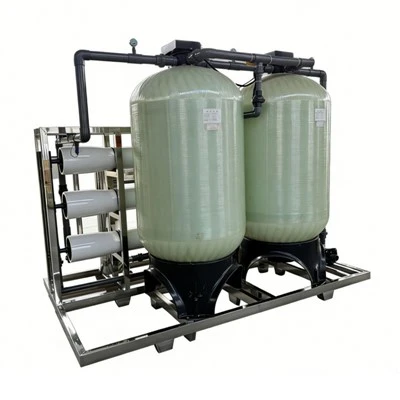
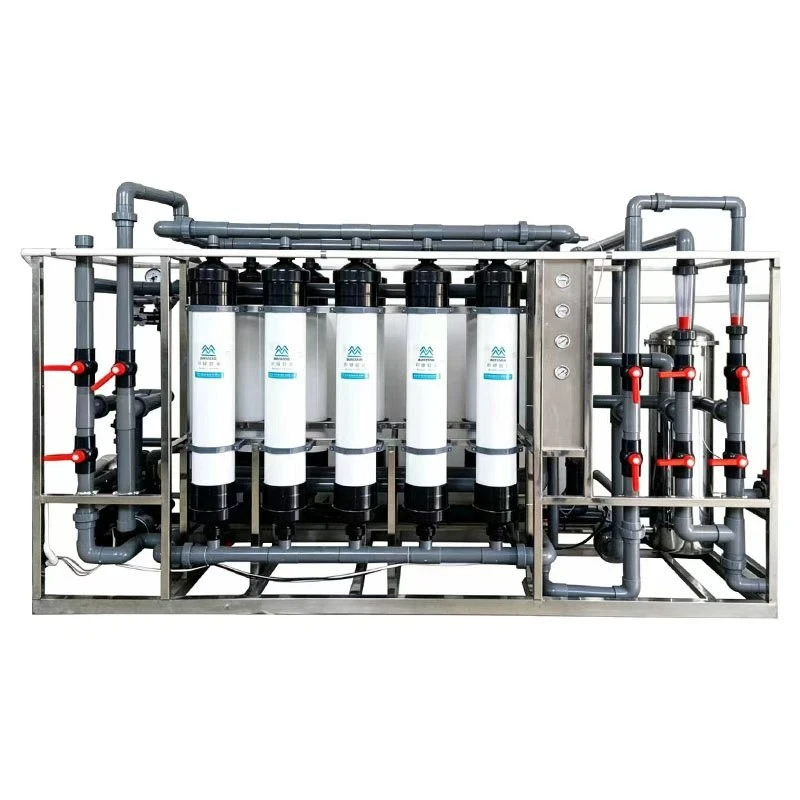
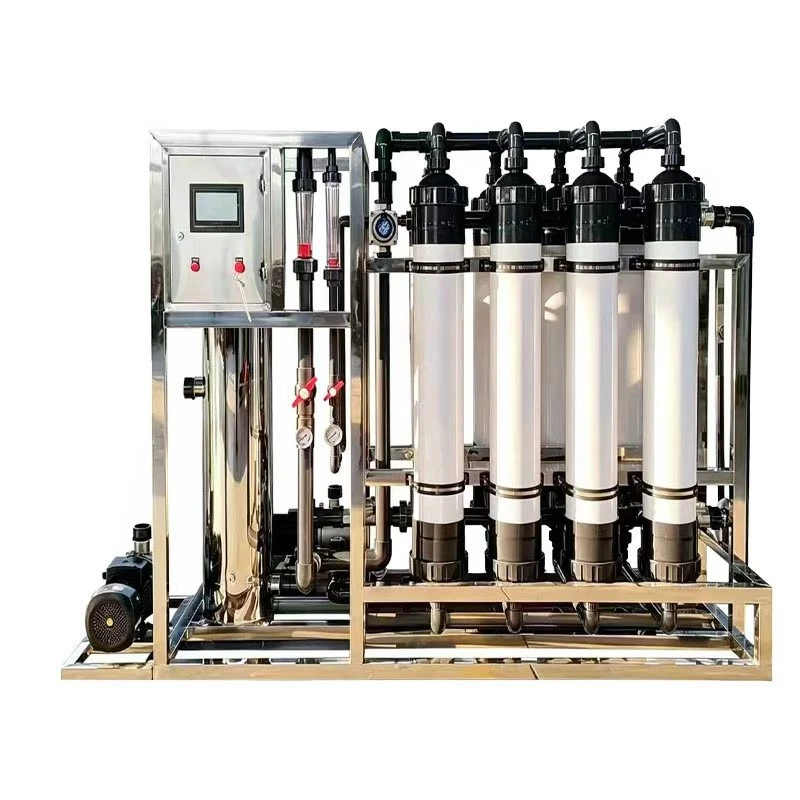
Industrial membrane filtration systems separate suspended solids, macromolecules, and dissolved ions from liquid streams utilizing differential pressure across selective polymeric or ceramic barriers. Configured as modular, pre-assembled skids, these systems integrate process pumps, automated valve matrices, instrumentation loops, and pressure vessels (housing spiral-wound, hollow fiber, or ceramic membrane elements) onto structural steel frames.
Unlike standard filtration units, these skids are engineered to match exact feed-water chemistry, thermal limits, and chemical compatibility profiles, minimizing downtime through automated Clean-in-Place (CIP) and Sterilization-in-Place (SIP) sub-systems.
-
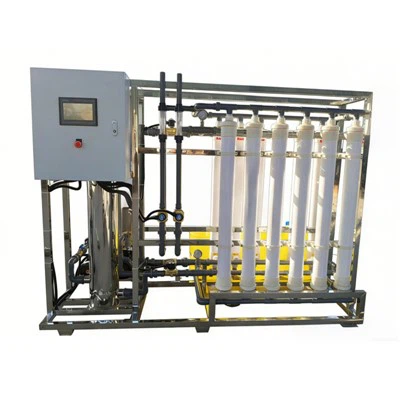
![Industrial Ultrafiltration System]() Industrial Ultrafiltration System· Fully automatic ultrafiltration, wide water source compatibility, labor-saving.view more
· High-efficiency purification, stable & compliant effluent quality.
· Customizable capacity & material, certified & reliable supply. -
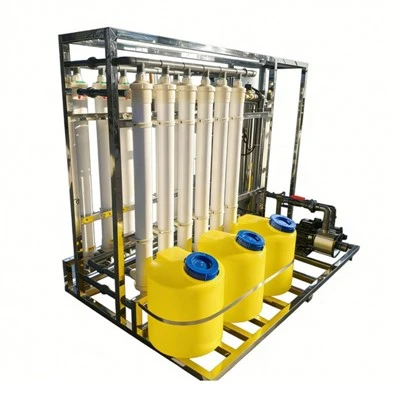
![Hollow Fiber UF Membrane]() Hollow Fiber UF Membrane• High-precision filtration, effectively removes bacteria and impurities.view more
• Wide pH 2–10 range, stable in complex water conditions.
• Ready to install, compatible with mainstream systems without modification. -
![Nanofiltration Water Purification System]() Nanofiltration Water Purification System· Precision nanofiltration delivers stable, compliant water quality.view more
· 65% high water recovery cuts operational costs.
· Fully customized solutions fit all industrial scenarios. -
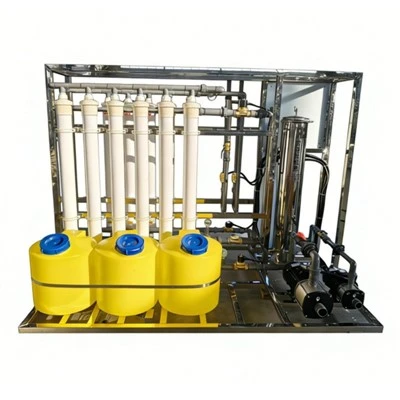
![Ultrafiltration System for Water Reuse]() Ultrafiltration System for Water Reuse· Up to 98% water recovery rate, turn wastewater into reusable water.view more
· Anti-pollution & stable, low operation cost & easy maintenance.
· Customizable solutions, certified quality & full after-sales support. -
![Drinking Water UF System]() Drinking Water UF System· 0.01μm Ultrafiltration, Direct Drinking Water from Well Water.view more
· Industrial-grade Durable & Dual Control Modes.
· Custom Solutions, Certified Quality, On-time Delivery.


Key Features
Modular Skid Architecture
Pre-piped and pre-wired on structural frames (304 or 316L stainless steel), reducing on-site installation labor and footprint constraints.


Multi-Stage Filtration Spectrum
Scalable configurations supporting Microfiltration (MF, 0.1-10 um), Ultrafiltration (UF, 0.01-0.1 um), Nanofiltration (NF), and Reverse Osmosis (RO) membranes.
Sanitary & Industrial Wetted Parts
Standardized on 316L stainless steel for process piping with internal surface finishes polished to mechanical or electropolished Ra <= 0.4 um for sanitary grades.

Automated Process Control
Integrated PLC/HMI architecture (Siemens S7-1500 or Allen-Bradley ControlLogix) with PID loop control for transmembrane pressure (TMP), flow velocity, and recovery rates.
Integrated CIP/SIP Stations
Dedicated chemical dosing tanks, shell-and-tube heaters, and high-flow recirculation pumps designed for automated membrane regeneration using caustic, acid, and oxidant cleaning protocols.


Precision Instrumentation
Inline electromagnetic flow meters, sanitary pressure transmitters, toroidal conductivity sensors, and pH/ORP probes tied directly to the master control panel.
Technical Specifications
|
Parameter |
Specification Range (Customizable per RFP) |
|
Separation Technologies |
Microfiltration (MF) / Ultrafiltration (UF) / Nanofiltration (NF) / Reverse Osmosis (RO) |
|
Membrane Element Types |
Spiral-wound, Hollow Fiber, Ceramic Monoliths, Tubular PVDF/PES/Ceramic |
|
System Capacity (Permeate Flow) |
5 m3/h to 500 m3/h per single skid (parallel clustering available) |
|
Operating Pressure Range |
0.1 MPa to 6.8 MPa (depending on NF/RO vs. UF/MF application) |
|
Wetted Materials |
316L Stainless Steel, 304 SS (frame), PVDF, PTFE, EPDM/FKM (gaskets meeting FDA/USP Class VI) |
|
Surface Finish (Ra) |
Mechanical polish Ra <= 0.6 um; Electropolished Ra <= 0.4 um (Sanitary Grade) |
|
Control System |
Siemens / Allen-Bradley PLC, 10-inch HMI touchscreen, Ethernet/IP, Profibus, Modbus TCP |
|
Power Supply |
380V-480V, 50/60Hz, 3-Phase (customizable per regional grid requirements) |

Municipal & Industrial Wastewater: Tertiary treatment, landfill leachate concentration, Zero Liquid Discharge (ZLD) pretreatment, and oily wastewater separation.
Food, Beverage & Dairy: Milk and whey protein concentration (WPC/WPI), juice clarification, beer recovery, and process water demineralization.
Biopharmaceutical Production: Water for Injection (WFI) generation, buffer preparation, antibiotic concentration, and cell harvest clarification.
Chemical & Petrochemical: Recovery of valuable catalysts, separation of emulsions, acid/alkali waste reclamation, and cooling tower blowdown minimization.
Engineering teams work directly from client Process Flow Diagrams (PFDs) and water analysis reports to deliver custom skids. Customization parameters include:
Footprint Optimization: Multi-tier vertical skids or modular containerized setups for remote outdoor deployment.
Material Upgrades: Substitution of 316L with 904L, Super Duplex Stainless Steel (2507), or Titanium for highly corrosive marine or hypersaline environments.
Redundancy Design: N+1 pump configurations, dual-strainer pre-filtration loops, and automatic fail-over pneumatic valves.
Code Compliance Alignment: Electrical and structural fabrication built to match specific destination standards, including ASME, PED (CE), UL/CSA panels, and ATEX explosion-proof classifications for hazardous zones.
Quality Assurance
Manufacturing processes adhere to strict traceability and verification standards prior to factory release:
Material Test Reports (MTRs)
Full 3.1 material certificates provided for all pressure-containing metallic components in accordance with EN 10204.
Welding Verification
All pressure vessel and sanitary pipe welding performed by ASME Section IX qualified welders; 100% visual inspection backed by Boroscope weld inspection and radiographic (RT) or dye penetrant (PT) testing upon request.

Pressure & Hydrostatic Testing
Pressure vessels and skids undergo hydrostatic testing at 1.5x maximum allowable working pressure (MAWP) prior to surface finishing and insulation.
Factory Acceptance Testing (FAT)
Fully documented dry and wet testing of the control panel, instrumentation loop calibration, and pneumatic valve actuation performed at the manufacturing facility prior to crating.

After-sales Technical Support
Remote Engineering Diagnostics: Secure VPN gateway integration within the PLC control panel for remote troubleshooting, firmware updates, and real-time process data logging by application engineers.
Spare Parts Availability: Critical wear items—including O-rings, replacement membrane modules, instrumentation diaphragms, and mechanical pump seals—stocked for immediate dispatch.
Commissioning & SAT Support: On-site engineering supervision available for mechanical tie-ins, electrical hookups, membrane loading, and Site Acceptance Testing (SAT).
Documentation Package: Comprehensive documentation handover including P&IDs, electrical schematic drawings, component data sheets, spare parts lists (SPM), and Operation & Maintenance (O&M) manuals.
FAQ

Request a Quote
To initiate an application review and receive a formal technical proposal with preliminary P&IDs and sizing calculations, please submit the following parameters to the engineering sales team:
Feed Water Source & Quality Report: (TDS, TSS, COD/BOD, pH, temperature range, and presence of oils or oxidants).
Required Permeate Flow Rate: (Average and peak operational capacity in m3/h or GPM).
Target Permeate Quality: (Required conductivity, SDI, or maximum allowable particle size).
Operating Schedule: (Hours of operation per day, batch vs. continuous processing mode).
Facility Constraints: (Available footprint, power supply specifications, and required design codes such as ASME, PED, or ATEX).
We're well-known as one of the leading membrane filtration equipment manufacturers and suppliers in China, featured by quality products and good price. Please rest assured to buy bulk membrane filtration equipment made in China here from our factory. Customized orders are welcome.
drinking water filtration, Hollow Fiber UF Membrane, Industrial Ultrafiltration System