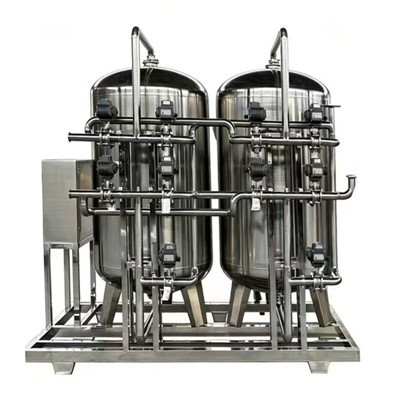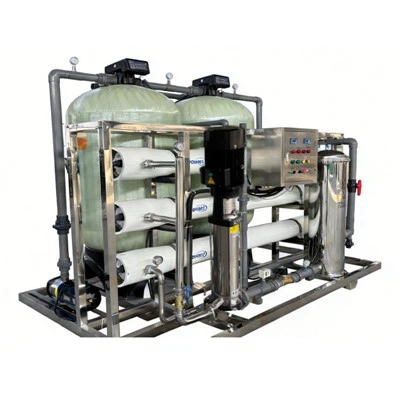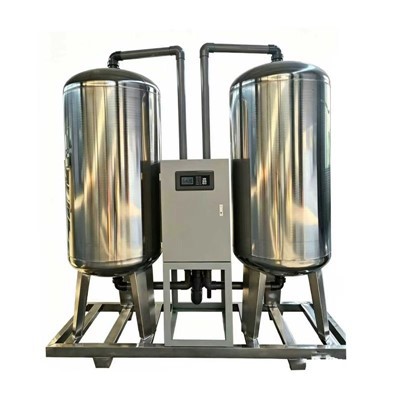


The Water Disinfection Skid System is a pre-assembled water treatment package designed for continuous disinfection in municipal water treatment plants, industrial facilities, and wastewater treatment projects. It integrates disinfection equipment, process piping, dosing pumps, valves, instrumentation, and an electrical control panel on a common structural base.
The system can be configured with ultraviolet (UV) disinfection, sodium hypochlorite dosing, chlorine dioxide dosing, or ozone treatment. Each configuration uses dedicated treatment equipment and control parameters according to the water quality, flow rate, and required disinfection target.
A standard skid package can include the treatment reactor or injection assembly, process pumps, chemical dosing equipment where applicable, flow meters, pressure instruments, sampling points, and PLC control panel. Chemical storage tanks, static mixers, online analyzers, and weatherproof enclosures can be incorporated according to project requirements.
Key Features
Integrated Skid Construction: Combines treatment equipment, piping, valves, instruments, and control components on a common base frame.
Multiple Disinfection Processes: Supports UV, sodium hypochlorite, chlorine dioxide, and ozone configurations.
Automatic Process Control: PLC-based control manages pump operation, chemical dosing, equipment status, and process alarms.
Online Water Monitoring: Optional instruments measure flow rate, pressure, pH, ORP, turbidity, and residual disinfectant.
Flexible System Integration: Process connections, electrical interfaces, and communication protocols can be configured for existing treatment facilities.
Maintenance Access: Equipment layout provides access to pumps, valves, instruments, and replaceable treatment components.
Technical Specifications
|
Parameter |
Specification |
|
Equipment Type |
Skid-Mounted Water Disinfection System |
|
Treatment Capacity |
5–100 m³/h |
|
Disinfection Methods |
UV / Sodium Hypochlorite / Chlorine Dioxide / Ozone |
|
Skid Frame |
Carbon Steel with Epoxy Coating / SS304 / SS316L |
|
Process Piping |
UPVC / PVDF / SS316L |
|
Nominal Pipe Size |
DN25–DN150 |
|
Design Pressure |
0.6–1.6 MPa |
|
Dosing Pump Type |
Solenoid-Driven / Motor-Driven Diaphragm Pump |
|
Control System |
PLC with Touchscreen HMI |
|
Flow Measurement |
Electromagnetic Flow Meter |
|
Monitoring Parameters |
Flow / Pressure / pH / ORP / Turbidity / Residual Chlorine |
|
Communication |
Modbus RTU / Modbus TCP |
|
Power Supply |
380 V, 50 Hz, 3-Phase |
|
Installation |
Skid-Mounted |
Working Principle
The system operates according to the selected disinfection process.
UV Disinfection: Water passes through a UV reactor where ultraviolet lamps emit radiation at 254 nm. UV intensity, flow rate, and UV transmittance are relevant operating parameters for evaluating the delivered UV dose. The control system monitors reactor operating conditions and generates alarms when configured operating limits are exceeded.
Chemical Disinfection: Metering pumps inject sodium hypochlorite or chlorine dioxide into the water pipeline. A static mixer or contact tank supports disinfectant distribution and contact. Online residual analyzers can monitor downstream disinfectant concentration.
Ozone Disinfection: An ozone generator produces ozone gas, which is transferred into the water through a gas-liquid injection assembly. A contact tank provides the required reaction period, while an off-gas treatment unit can be included in the system design.
Applications
Municipal Drinking Water: Disinfection packages for municipal water treatment plants and distribution system applications.
Industrial Process Water: Microbial control in selected food processing, pharmaceutical utility water, and industrial production water systems.
Wastewater Treatment: Tertiary effluent disinfection before treated wastewater discharge or reuse.
Industrial Cooling Water: Controlled biocide dosing in cooling tower circulation systems as part of a water management program.
Water Reuse Projects: Disinfection of treated water for designated industrial reuse applications.
Customization Options
Pump Configuration: Single or duty/standby metering pump arrangements with automatic changeover controls
Chemical Storage: PE chemical tanks with level transmitters, secondary containment, and low-level alarms.
Instrumentation: Optional pH, ORP, turbidity, UV intensity, UV transmittance, and residual disinfectant analyzers.
Enclosure: Indoor skid, outdoor weatherproof canopy, or containerized installation.
Automation: PLC and HMI configuration with Modbus communication and plant SCADA interface.
Piping Connections: Customized pipe diameters, flange standards, valve materials, and inlet/outlet orientations.
FAQ
Q: What information is required to size a water disinfection skid?
A: The main selection inputs include normal and peak flow rates, inlet water quality, target disinfection requirements, operating pressure, selected treatment technology, and installation conditions.
Q: Can the system be integrated into an existing water treatment plant?
A: Yes. The skid can be designed around existing pipeline connections, available power supplies, control signals, and plant communication requirements. Interface details should be established during engineering design.
Q: What factory tests are available before shipment?
A: Factory testing can include piping pressure tests, electrical continuity checks, PLC input/output checks, instrument verification, and pump operation tests. The inspection scope should be defined in the project FAT document.
Q: Can standby equipment be included?
A: Yes. Standby dosing pumps, isolation valves, and automatic changeover controls can be incorporated where continuous chemical dosing is required.
Request a Quote
For system selection and project pricing, please provide:
- Normal and peak water flow rates (m³/h)
- Water source and inlet water quality analysis
- Required disinfection technology
- Target microbial reduction or residual disinfectant concentration
- Inlet and outlet operating pressure
- Available installation space and power supply
- Required instrumentation and SCADA communication protocols
Engineering information and process specifications help determine the skid configuration, equipment capacity, material selection, and system interfaces.
Hot Tags: water disinfection skid system, China water disinfection skid system manufacturers, suppliers, factory