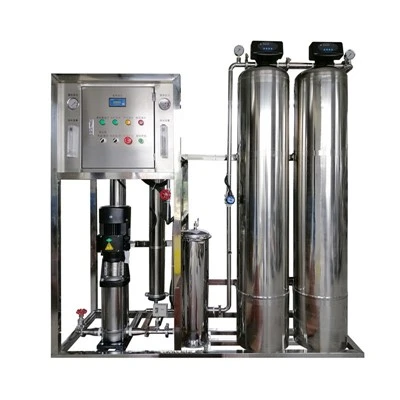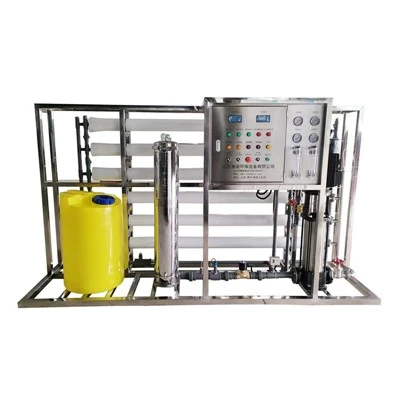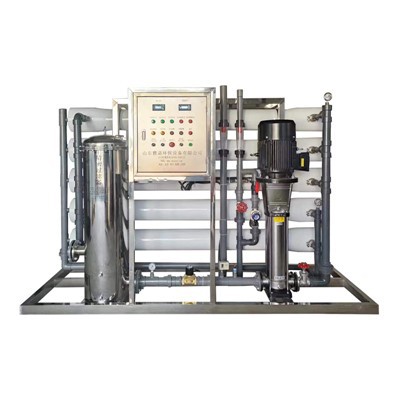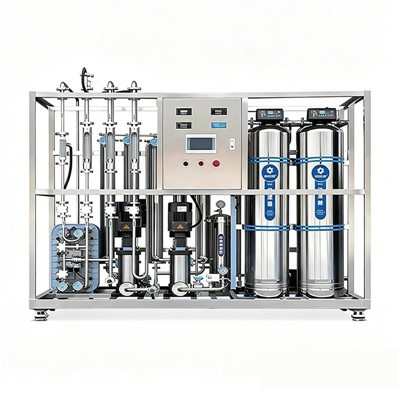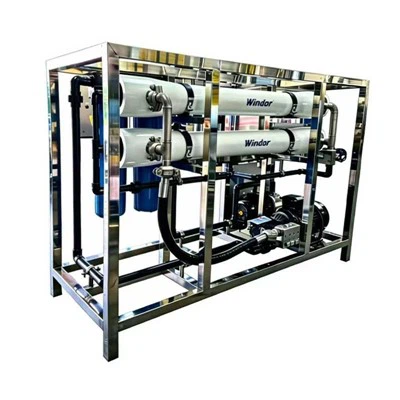


The Industrial Oil-Water Separation System removes free oil and dispersed oil droplets from industrial wastewater before discharge or downstream treatment. It combines gravity separation with oleophilic coalescing media to collect floating oil and separate suspended oil droplets from the water phase.
The system is suitable for wastewater generated by CNC machining, metalworking, automotive parts washing, equipment maintenance, and petroleum processing. Its treatment process includes preliminary debris removal, gravity separation, oil droplet coalescence, and separate oil and water discharge.
Key Features
Gravity and Coalescence Separation: Combines a primary separation chamber with oleophilic media to collect free oil and promote the aggregation of dispersed oil droplets.
Stainless Steel Construction: SS304 and SS316L options are available for tanks and wetted components, with material selection based on wastewater composition.
Automatic Oil Collection: Belt or rotary skimmers collect floating oil and transfer it into a separate waste oil container.
Controlled Hydraulic Flow: Internal baffles distribute incoming wastewater and reduce localized turbulence within the separation chambers.
Integrated Control System: PLC-based control supports equipment operation, pump control, and optional automatic discharge functions.
Technical Specifications
|
Parameter |
Specification |
|
Equipment Type |
Industrial Oil-Water Separation System |
|
Model Series |
OWS-Series |
|
Treatment Capacity |
5–50 m³/h |
|
Separation Method |
Gravity Separation + Coalescence |
|
Effluent Oil Target |
Below 10 mg/L (application-specific performance target) |
|
Inlet Oil Concentration |
Up to 10,000 mg/L (design application range) |
|
Operating Temperature |
5–70°C |
|
Tank Material |
SS304 / SS316L |
|
Coalescing Media |
Oleophilic Polypropylene / Stainless Steel |
|
Oil Collection |
Belt Skimmer / Rotary Skimmer |
|
Power Supply |
380V / 415V, 3-phase, 50/60Hz |
|
Control System |
PLC + HMI |
|
Communication |
Modbus RTU |
|
Installation Type |
Skid-Mounted / Fixed Installation |
|
Discharge Type |
Separate Oil and Water Outlets |
Applications
CNC Machining and Metalworking: Separates tramp oil and floating lubricants from machine washwater, workshop drainage, and collected industrial wastewater.
Automotive Manufacturing: Treats oily wastewater from component washing stations, engine maintenance areas, and vehicle parts cleaning processes.
Petrochemical Processing: Provides preliminary oil removal from suitable oily wastewater streams before biological treatment, filtration, or other downstream processes.
Heavy Equipment Maintenance: Processes wastewater from machinery washing bays, maintenance workshops, and equipment cleaning facilities containing petroleum-based oils.
Industrial Parts Washing: Removes floating oil and dispersed oil droplets from washing wastewater before subsequent treatment or recycling.
Working Principle
Inlet Screening: Incoming wastewater passes through an inlet chamber where removable screens or basket strainers capture coarse debris and suspended solids.
Gravity Separation: Flow enters the primary separation chamber, where reduced hydraulic velocity allows free oil to rise to the surface while heavier suspended solids settle toward the bottom.
Coalescence: Partially separated wastewater passes through oleophilic polypropylene or stainless steel media. Dispersed oil droplets attach to the media, collide, and combine into larger droplets that rise toward the water surface.
Oil and Water Discharge: Surface oil is collected by a belt or rotary skimmer and transferred into a waste oil container. Separated water flows through the outlet chamber for discharge or further treatment.
Customization Options
Tank Material: SS304, SS316L, or alternative construction materials selected according to wastewater characteristics.
Oil Collection Equipment: Belt skimmers, rotary skimmers, and dedicated oil collection tanks.
Sludge Discharge: Manual or automated discharge valves for accumulated solids.
Installation Structure: Skid-mounted assemblies with integrated pumps, piping, flow meters, and electrical control panels.
Electrical Configuration: PLC controls, HMI interfaces, and optional communication interfaces.
Downstream Treatment: Activated carbon filtration, ultrafiltration, or chemical treatment systems for additional wastewater polishing.
FAQ
Q: What types of oil can the system separate?
A: The system primarily handles free oil and dispersed oil droplets. Stable emulsified oil and dissolved hydrocarbons generally require additional treatment processes.
Q: Does the system require chemical additives?
A: Gravity and coalescence separation can operate without continuous chemical dosing when treating suitable free-oil and dispersed-oil wastewater. Chemical demulsification may be necessary for stable emulsions.
Q: How often should coalescing media be cleaned?
A: Cleaning frequency depends on oil loading, suspended solids, and operating conditions. Periodic inspection and cleaning are recommended to prevent media blockage and maintain hydraulic flow.
Q: What information is supplied with the equipment?
A: Documentation can include equipment drawings, electrical diagrams, operation manuals, material certificates, and factory inspection records according to the agreed supply scope.
Request a Quote
To select a suitable oil-water separation system, please provide:
- Required treatment capacity (m³/h).
- Inlet oil concentration and wastewater composition.
- Oil type and approximate droplet size.
- Suspended solids concentration.
- Operating temperature and pH range.
- Required effluent oil concentration.
- Installation dimensions and available power supply.
2D equipment drawings and 3D STEP files can be included in the engineering documentation package when specified in the project requirements.
Hot Tags: oil-water separation system, China oil-water separation system manufacturers, suppliers, factory