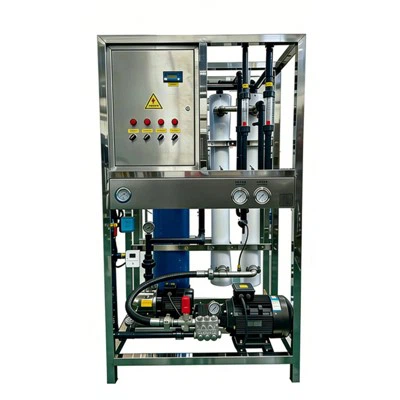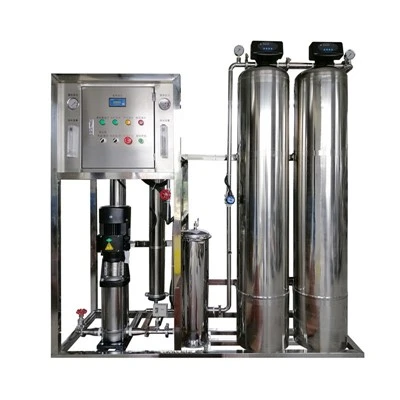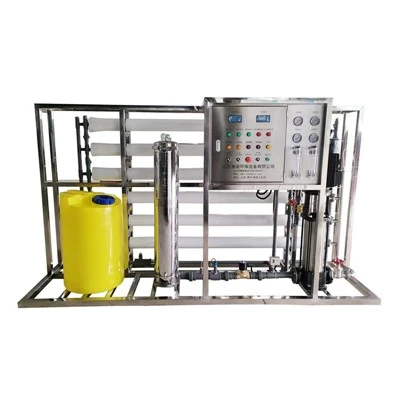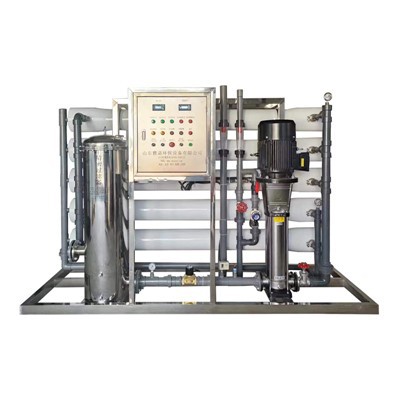


The Industrial Wastewater Recycling System treats industrial effluent and converts it into reclaimed water for reuse in manufacturing processes, equipment washing, cooling tower makeup, and other non-potable applications. The system integrates physical filtration, membrane separation, and optional polishing processes to reduce suspended solids, dissolved salts, and selected organic contaminants.
Available in skid-mounted and containerized designs, the system combines pretreatment, ultrafiltration (UF), reverse osmosis (RO), and optional electrodeionization (EDI). Designed treatment capacities range from 5 to 100 m³/h per skid, with parallel configurations available for larger water treatment projects.
Typical applications include metal finishing, chemical production, textile processing, electronics manufacturing, and automotive component cleaning facilities.
Key Features
Multi-Stage Water Treatment: Combines multimedia filtration, cartridge filtration, UF, and RO to address different contaminant loads in industrial wastewater.
Membrane Separation: Polyamide thin-film composite RO membranes separate dissolved salts and other membrane-rejectable contaminants from the water stream.
Automated Cleaning System: Integrated CIP equipment supports chemical cleaning of RO membranes. UF modules can incorporate automatic backwashing.
PLC-Based Operation: Siemens S7-1200 PLC and touch-screen HMI control system operation and monitor flow, pressure, pH, and conductivity.
Modular Equipment Design: Open-skid, enclosed, and containerized configurations simplify equipment transportation, installation, and integration with existing treatment facilities.
Technical Specifications
|
Parameter |
Standard Specification |
Optional Configuration |
|
Treatment Capacity |
5–100 m³/h per skid |
Parallel skids up to 500 m³/h |
|
Water Recovery Rate |
70–85% |
DTRO or high-pressure RO process |
|
RO Salt Rejection |
≥98.5% |
≥99.2% dual-pass RO |
|
Pretreatment |
Multimedia sand filter, activated carbon, cartridge filter |
Disc filtration, UF, MBR |
|
Cartridge Filtration |
5 μm |
Alternative filtration grades |
|
RO Membrane |
Polyamide TFC |
Low-fouling or high-pressure membranes |
|
High-Pressure Pump |
SS316L centrifugal pump |
Duplex stainless steel |
|
Structural Frame |
Epoxy-coated carbon steel |
SS304 or SS316L |
|
Pipework |
UPVC / Schedule 80 PVC |
SS316L, Duplex SS, PVDF |
|
Control System |
Siemens S7-1200 PLC, 7-inch HMI |
Schneider or Allen-Bradley PLC |
|
Inlet TDS |
Below 10,000 mg/L |
Specialized high-TDS pretreatment |
|
Inlet Turbidity |
Below 5 NTU |
Additional pretreatment |
|
Inlet Oil Content |
Below 5 mg/L |
Oil separation and removal stages |
|
Power Supply |
Three-phase 380V/50Hz |
460V/60Hz or 230V/60Hz |
Applications
Electroplating and Metal Finishing: Treats metal-finishing rinse wastewater for reuse after appropriate suspended solids and dissolved metal removal. Additional precipitation or metal recovery processes can be integrated when required.
Chemical Manufacturing: Processes selected chemical wastewater streams after suitable organic contaminant removal and chemical conditioning.
Textile Dyeing and Finishing: Treats dyeing and washing wastewater following appropriate color removal, biological treatment, and membrane pretreatment.
Electronics and Semiconductor Manufacturing: Provides RO-based pretreatment water for downstream ultrapure water production and industrial water reuse systems.
Automotive and Machinery Cleaning: Processes wastewater from component washing, rinsing, and equipment cleaning operations for compatible reuse applications.
Working Principle
Pretreatment and Conditioning
Incoming wastewater passes through screening, multimedia filtration, activated carbon filtration, or other selected pretreatment equipment. Chemical dosing can regulate pH, control scaling, and support contaminant removal.
Precision Filtration
Cartridge filters with 5 μm filtration ratings capture fine suspended particles before the water enters the RO membrane system. UF modules can provide additional suspended solids and colloidal removal.
Reverse Osmosis Separation
A high-pressure pump delivers pretreated water to the RO membrane modules. Dissolved salts and other rejected contaminants are separated into a concentrated wastewater stream, while permeate flows toward the post-treatment stage.
Post-Treatment and Water Storage
RO permeate enters a storage tank or additional polishing equipment. Optional EDI or UV treatment supports applications requiring further conductivity reduction or microbial control.
Concentrate and Membrane Cleaning
Automated flushing controls help manage membrane operating conditions. The integrated CIP system circulates cleaning solutions through RO membrane modules when cleaning is required. Concentrate is collected for approved disposal or further treatment.
Customization Options
The system can be configured according to wastewater characteristics, treatment capacity, reuse requirements, and installation conditions.
|
Configuration |
Available Options |
|
Equipment Layout |
Open skid, enclosed skid, 20 ft or 40 ft container |
|
Frame Material |
Epoxy-coated carbon steel, SS304, SS316L |
|
Power Supply |
380V/50Hz, 460V/60Hz, 230V/60Hz |
|
Pretreatment |
Oil separation, chemical dosing, UF, MBR |
|
Post-Treatment |
EDI, UV sterilization, additional filtration |
|
Automation |
PLC, HMI, Ethernet, 4G remote monitoring |
Key Selection Factors
System selection should begin with a wastewater analysis covering TDS, COD, BOD, pH, hardness, oil content, turbidity, and operating temperature. Buyers should also specify the required treatment capacity, target recovery rate, and reclaimed water quality.
Concentrate disposal arrangements, available installation space, power supply, and existing treatment equipment should also be considered when preparing the process design.
FAQ
Q: What information is required for an accurate quotation?
A: Provide a recent wastewater analysis, daily treatment volume, peak flow rate, target reuse water quality, and concentrate disposal requirements.
Q: Can the system treat high-COD wastewater?
A: High-COD wastewater generally requires appropriate biological treatment, advanced oxidation, or other organic removal processes before RO. The pretreatment configuration depends on wastewater composition and biodegradability.
Q: How often should RO membranes be replaced?
A: Membrane replacement depends on feedwater quality, operating pressure, pretreatment effectiveness, and cleaning frequency. Regular performance monitoring helps determine cleaning and replacement requirements.
Q: What technical documents are supplied?
A: Project documentation can include P&ID drawings, electrical schematics, operating manuals, spare parts lists, and factory acceptance test records.
Request a Quote
Looking for an industrial wastewater recycling system for your manufacturing facility? Send your wastewater analysis, required treatment capacity, target reuse water quality, and installation requirements to our engineering team.
Required Information: Wastewater Analysis Report, Daily Flow Rate, Reuse Water Requirements, and Site Layout.
Hot Tags: industrial wastewater recycling system, China industrial wastewater recycling system manufacturers, suppliers, factory