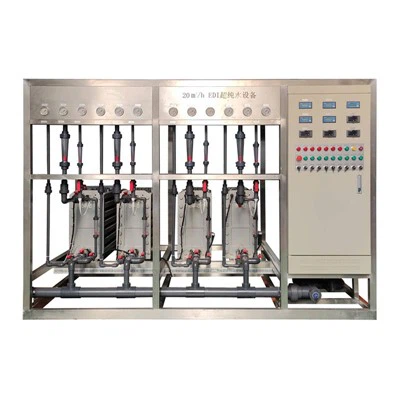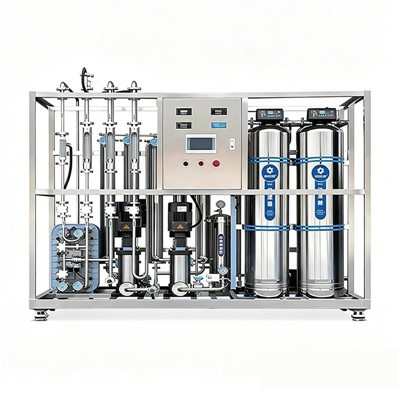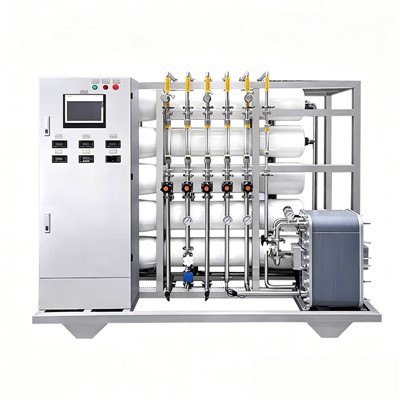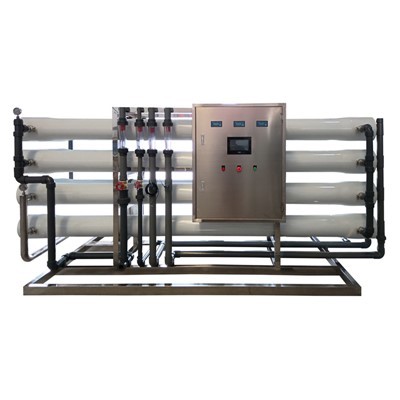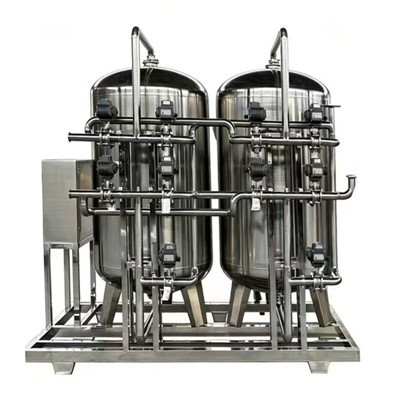


An Automatic Backwash Filter is an industrial self-cleaning filtration system designed to remove suspended solids from continuously flowing liquids. It is installed in pipelines to protect pumps, heat exchangers, spray nozzles, membranes, and other downstream equipment from particulate contamination.
The filter uses a reusable stainless steel screen to retain particles according to the selected filtration rating. As contaminants accumulate, the differential pressure between the inlet and outlet increases. When the preset pressure threshold is reached, or a programmed cleaning interval expires, the control system activates the automatic backwash cycle.
Available cleaning mechanisms include mechanical scraper and suction scanner designs. Both remove accumulated particles from the screen surface and discharge them through a dedicated drain outlet. The main filtration process continues during cleaning, making the system suitable for industrial water circuits and continuous process applications.
Key Features
Automatic Self-Cleaning: Differential pressure and timer-based controls initiate cleaning without routine manual screen removal.
Continuous Filtration: The cleaning mechanism operates while the main filtration process continues, subject to the selected filter design.
Stainless Steel Screen: SS304 and SS316L screen elements are available with filtration ratings from 50 to 3000 μm.
Multiple Cleaning Mechanisms: Mechanical scraper and suction scanner configurations accommodate different filtration and particle removal requirements.
PLC Control: Automatic cleaning sequences manage the drive mechanism and drain valve, with adjustable operating settings.
Industrial Construction: Carbon steel and stainless steel housings accommodate different pipeline materials and fluid conditions.
Technical Specifications
|
Parameter |
Specification |
|
Filter Type |
Automatic Backwash Filter |
|
Housing Material |
Epoxy-Coated Carbon Steel, SS304, SS316L |
|
Screen Material |
SS304, SS316L Wedge Wire Screen |
|
Filtration Rating |
50–3000 μm |
|
Flow Rate Range |
20–2500 m³/h |
|
Nominal Pressure Rating |
PN10, PN16, PN25 |
|
Standard Operating Temperature |
Up to 95°C |
|
Cleaning Mechanism |
Mechanical Scraper, Suction Scanner |
|
Cleaning Trigger |
Differential Pressure, Timer |
|
Control System |
PLC Automatic Control |
|
Power Supply |
380V/50Hz, 460V/60Hz, Three-Phase |
|
Connection |
Flanged |
|
Flange Standards |
ANSI, DIN, JIS |
Applications
Industrial Cooling Water: Removes suspended particles from recirculating cooling water before heat exchangers, condensers, and cooling equipment.
Water Treatment: Provides preliminary particulate filtration in water treatment systems, including selected RO and UF pretreatment configurations.
Chemical Processing: Filters process water, cooling liquids, and compatible industrial fluids before reuse or downstream processing.
Pulp and Paper: Filters white water, sealing water, and equipment supply water to reduce particulate accumulation in process lines.
Mining and Metallurgy: Handles equipment cooling water, spray water, and mineral processing water circuits containing suspended solids.
Working Principle
During normal operation, incoming fluid passes through the stainless steel screen, where suspended particles larger than the selected filtration opening are retained. Filtered liquid flows toward the outlet, while accumulated solids gradually increase the differential pressure across the screen.
When the preset differential pressure is reached or the cleaning timer activates, the PLC starts the backwash sequence.
For suction scanner filters, the drain valve opens and creates a pressure difference that draws accumulated particles through the suction nozzles. The scanning assembly moves across the screen surface to remove deposits and discharge them through the drain outlet.
For mechanical scraper filters, a motor-driven scraper rotates or moves along the screen surface to remove accumulated solids. The cleaning sequence and discharge operation follow the specific filter design.
After cleaning, the drain valve closes and the system returns to normal filtration. Main pipeline flow continues during the cleaning cycle in configurations designed for uninterrupted operation.
Key Selection Factors and Customization
Selecting an automatic backwash filter requires consideration of flow conditions, contaminant characteristics, and pipeline requirements.
Filtration Rating and Flow Rate: Select the screen opening according to the particle size requiring removal. Confirm the required flow rate together with the filter's effective screen area and pressure drop.
Fluid and Material Compatibility: Evaluate fluid composition, operating temperature, suspended solids, and corrosion characteristics when choosing carbon steel, SS304, or SS316L construction.
Cleaning Mechanism: Mechanical scraper and suction scanner designs should be selected according to particle characteristics and the required cleaning method.
Pipeline and Control Configuration: Specify inlet and outlet diameters, flange standards, installation orientation, drain connections, power supply, and PLC communication requirements.
Customization options include housing dimensions, flange configurations, screen materials, control panels, and communication interfaces such as Modbus, Profibus, and EtherNet/IP. Explosion-protected electrical configurations can also be specified for applicable hazardous-area installations.
FAQ
Q: Can the filter operate continuously during backwashing?
A: Yes. The main filtration flow continues during the cleaning cycle in designs equipped for online backwashing. The specific operating arrangement depends on the filter structure.
Q: How much water is consumed during backwashing?
A: Consumption depends on inlet pressure, drain pressure, flushing duration, screen area, and contaminant loading. It should be evaluated using the actual flushing flow rate and cleaning time.
Q: What determines the minimum pressure required for backwashing?
A: The required pressure depends on the cleaning mechanism, system pressure, and drain line conditions. Suction scanner systems require sufficient pressure differential to discharge accumulated particles.
Q: Can the filter screen be replaced on-site?
A: Screen inspection and replacement depend on the housing cover and internal assembly design. Maintenance access should be considered when selecting the installation configuration.
Request a Quote
Send us your required flow rate, filtration rating, operating pressure, temperature, fluid characteristics, and pipeline specifications to receive a suitable automatic backwash filter configuration and quotation.
Hot Tags: automatic backwash filter, China automatic backwash filter manufacturers, suppliers, factory