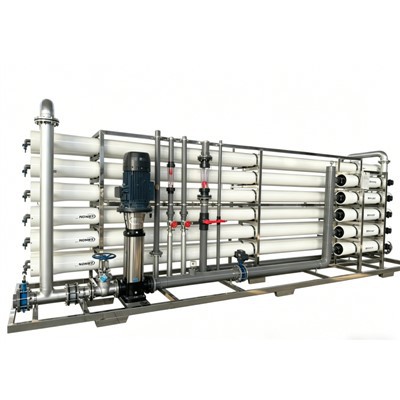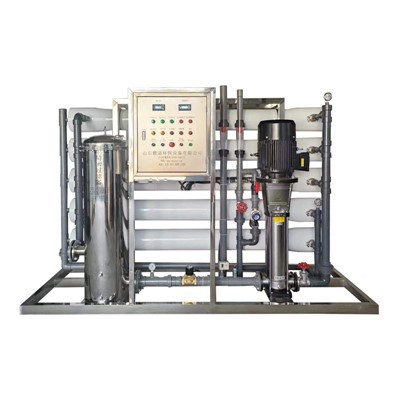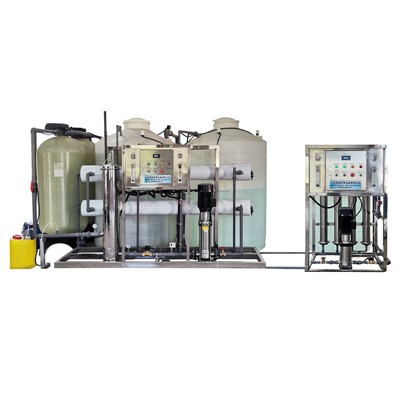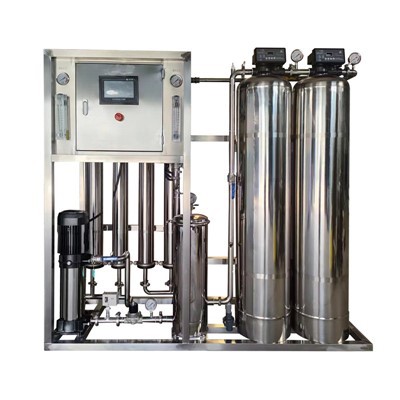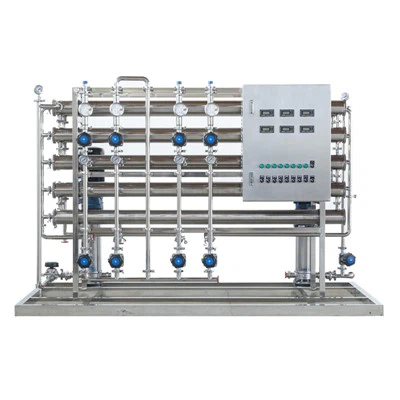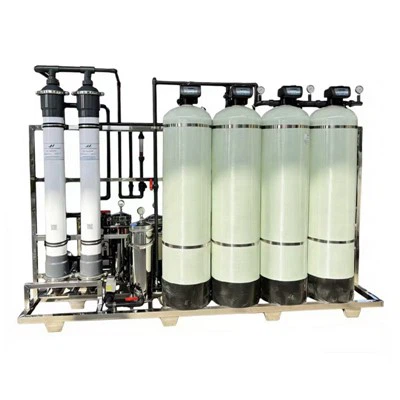

A deionization system is a device used to remove ionic impurities from water. It removes anions and cations from water using technologies such as ion exchange resins, electrodialysis, or reverse osmosis, resulting in high-purity deionized water.
This system is widely used in the electronics industry, laboratory preparation, pharmaceutical manufacturing, chemical production, and other fields where water quality requirements are extremely high. The purity of deionized water is usually measured by conductivity or resistivity; high-purity deionized water can have a resistivity of up to 18.2 MΩ·cm (25℃). The core components of a deionization system include anion exchange columns, mixed beds, and a control system. Mixed bed technology can remove both anions and cations simultaneously, resulting in higher efficiency. In the electronics industry, deionized water is used to clean semiconductor components to prevent ion contamination from affecting product performance. In laboratories, deionized water is used to prepare reagents to ensure the accuracy of experimental results. When using a deionization system, it is important to regenerate the ion exchange resin regularly to prevent resin saturation and a decrease in deionization efficiency. Furthermore, the system should be equipped with a water quality monitoring device to monitor the purity of the effluent in real time. Maintenance of the deionization system includes resin replacement and pipeline cleaning. Protective equipment must be worn during operation to avoid contact with strong acid and alkali regenerators.