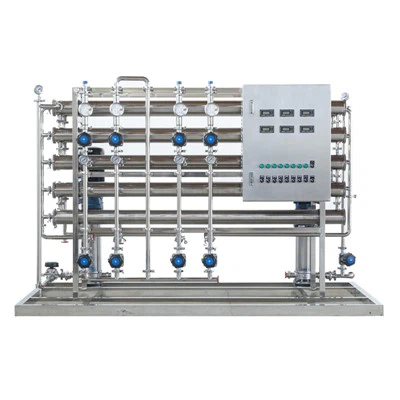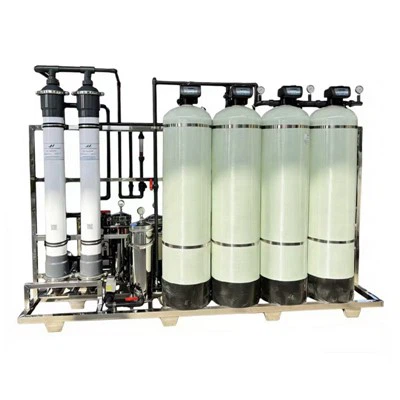

The development history of EDI (electrodeionization) equipment began with the concept being proposed in the 1950s, and commercial application was achieved in 1987. It subsequently spread rapidly worldwide, becoming the mainstream technology for ultrapure water preparation.
Conceptual Emergence (1950s–1980s): The theoretical basis of electrodeionization (EDI) technology was proposed by American researchers as early as the 1950s, combining the principles of electrodialysis and ion exchange, aiming to achieve a continuous desalination process without chemical regeneration.
Commercial Breakthrough (1987): In 1987, Millipore Corporation in the United States successfully launched the first commercial EDI device, Ionpure CDI™, marking the formal entry of this technology into the practical application stage and ushering in a new era of industrial application.
EDI (Electrodeionization) is a membrane separation desalination process that organically combines electrodialysis and ion exchange; it is a high-tech, green, and environmentally friendly technology. Internationally, over 3,000 EDI (Electrodeionization) units are currently in operation, with a total capacity exceeding 30,000 m³/h.
Over the past two decades, EDI technology has experienced rapid development, finding widespread application not only in ultrapure water projects in the electronics and pharmaceutical industries but also gradually replacing traditional mixed-bed desalination systems in chemical thermal power plant demineralization projects, reflecting a green and environmentally friendly technological upgrade.
In the future, EDI technology is expected to achieve breakthroughs in cost reduction, improved feedwater adaptability, solving membrane fouling problems, and integration with other technologies.