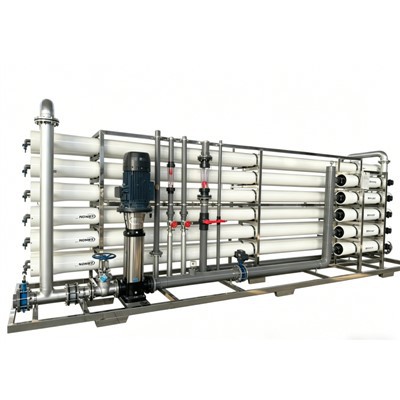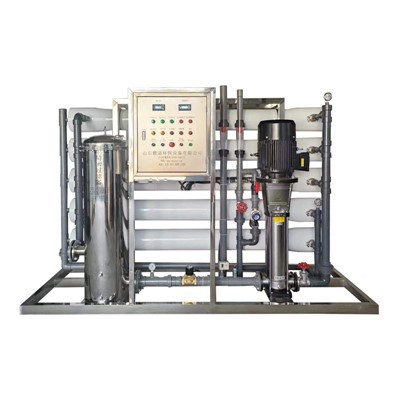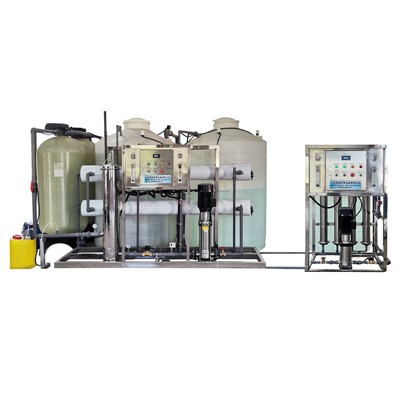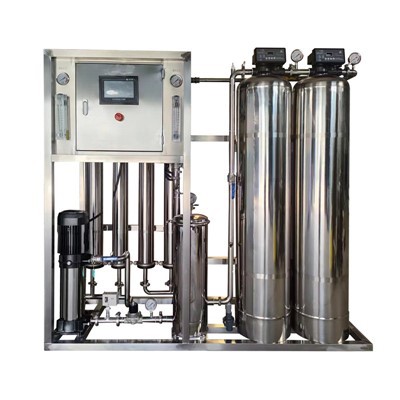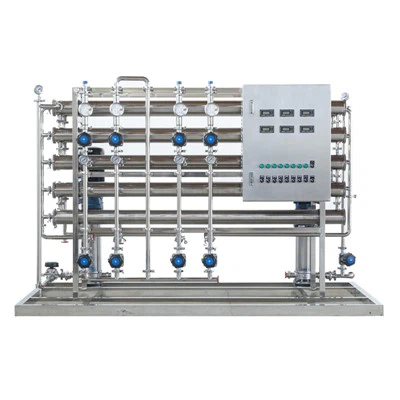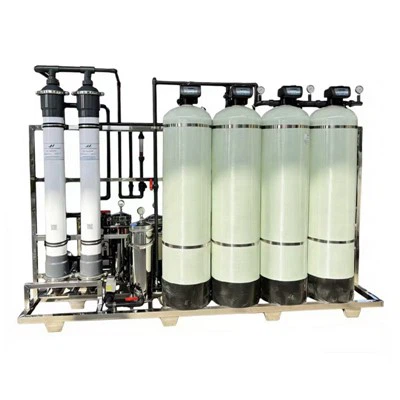
In water treatment equipment, the main accessories include auxiliary process equipment, such as pH adjustment, scale inhibitor addition, sterilization processes, nitrogen sealing processes, and end-of-pipe filtration.
Auxiliary process equipment is crucial for ensuring stable equipment operation and extending the lifespan of core consumables. pH adjustment mainly involves adding acid or alkali to adjust the pH of the aqueous solution to the required value. In the actual process of producing pure water, pH adjustment is particularly important to ensure the efficient operation of reverse osmosis membranes and EDI equipment and stable effluent.
Scale inhibitors, as essential components of reverse osmosis (RO) systems and nanofiltration (NF) and ultrafiltration (UF) systems, prevent scale formation on the membrane surface, improve water production and quality, and reduce operating costs. Their main components include acid dispersants, chelating agents, ion exchange resins, organic acids, and surfactants, which prevent or reduce scale formation through complexation and solubilization, lattice distortion, and electrostatic repulsion.
The resin regeneration process is a key step in restoring the resin's ion exchange capacity. Regeneration using acids, alkalis, or salts can restore the resin's exchange capacity, ensuring long-term stable equipment performance. In water softening equipment, the resin regeneration process includes backwashing, salt absorption (regeneration), slow rinsing (displacement), and backwashing again.
Ultraviolet (UV) sterilizers and TOC removers play crucial roles in ultrapure water production. UV sterilizers use 254nm wavelength ultraviolet light to kill bacteria and microorganisms, preventing bacterial contamination. TOC removers use 185nm wavelength ultraviolet light to catalyze and decompose organic molecules, reducing the TOC content in ultrapure water.
Ozone sterilization, as a highly efficient bactericide, kills bacteria by disrupting the microbial membrane structure through oxidation, leaving no toxic residues, and is widely used in water treatment equipment. Its disinfection principle is based on the unstable decomposition of ozone molecules and the strong oxidizing effect of active oxygen atoms.
Pasteurization is a disinfection process that involves heating a liquid to a specific temperature and maintaining it for a certain time. It is widely used for periodic disinfection in pretreatment units such as activated carbon in ultrapure water equipment, RO/EDI units, and storage and distribution piping systems. Pasteurization, as an auxiliary process in the equipment system, provides long-term sterilization and disinfection maintenance.
The nitrogen sealing process involves filling the water tank with nitrogen gas to maintain an appropriate positive pressure, preventing atmospheric contact with the water surface and protecting the ultrapure water from contamination by carbon dioxide, bacteria, dust, and other airborne contaminants. Nitrogen sealing also prevents ultrapure water from contacting air, thus avoiding a decrease in its resistivity.
The final filtration stage employs micron-level precision filters and membrane filters, equipped with 0.1µm/0.22µm microporous pleated membrane filter cartridges, to remove fine particles and bacteria from the ultrapure water, prevent mixed-bed resin shedding, and ensure stable product water quality.