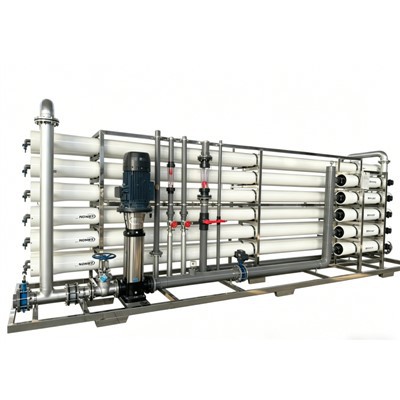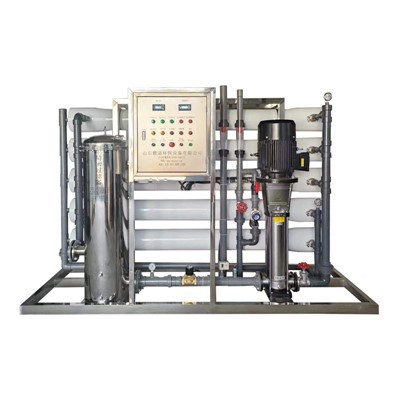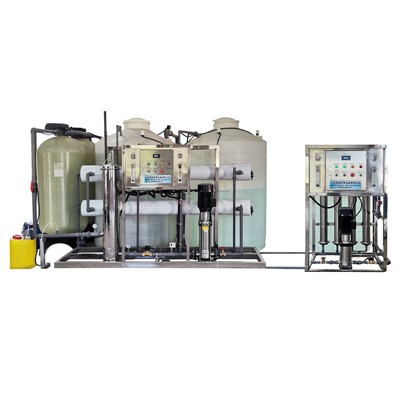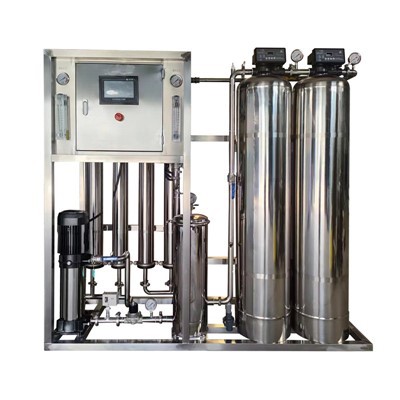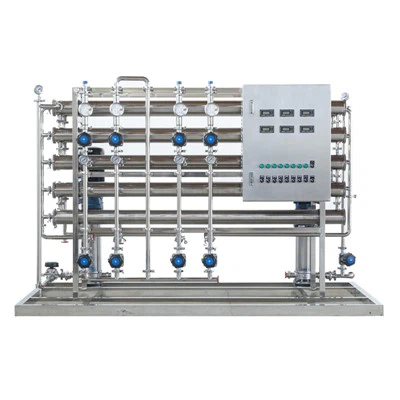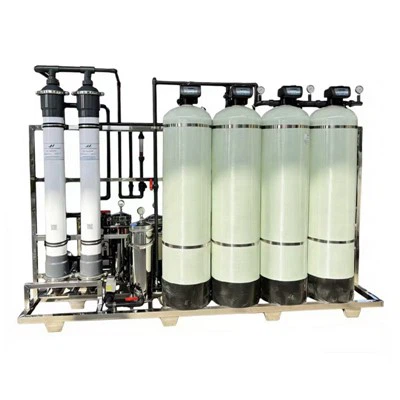
Electrodeionization (EDI) equipment is typically used as a fine treatment unit in conjunction with pretreatment technologies such as reverse osmosis (RO) to form an ultrapure water treatment system of "pretreatment → RO → EDI," replacing the traditional ion exchange mixed-bed process.
EDI equipment adopts a modular design, consisting of multiple identical EDI modules connected in parallel, allowing for flexible configuration of system scale according to permeable water production requirements. Each module usually has independent inlet and outlet pipelines, allowing for isolated maintenance without affecting the operation of other modules.
The system is equipped with an automated control system, enabling unattended, continuous, and stable operation. The core control includes online water quality monitoring (such as conductivity and resistivity) and automatic adjustment of operating parameters (such as voltage and current) based on water quality. The system has a fault alarm function, automatically recording and triggering an alarm when critical parameters are abnormal or equipment malfunctions occur. The user interface incorporates ergonomic design, supports one-button start, and is easy to operate. Some systems also have multi-level management permissions (such as operator and administrator) and use 24V safe voltage control circuitry to ensure operational safety.
One of the core advantages of EDI technology is its ease of operation and maintenance. It utilizes a DC electric field and H+ and OH- ions generated by water electrolysis to continuously regenerate the resin, eliminating the need for periodic chemical regeneration using acids and alkalis like traditional mixed-bed systems. This avoids the storage, treatment, and discharge of harmful wastewater from acids and alkalis. The system recovery rate can reach 90%-95%, depending on the influent water quality (e.g., hardness).
The concentrate produced during EDI operation is typically of better quality than the permeate from primary reverse osmosis (RO). Therefore, most system designs return this concentrate to the raw water tank or pretreatment stage upstream of the RO system for reuse, significantly improving the water resource utilization rate of the entire water treatment system.