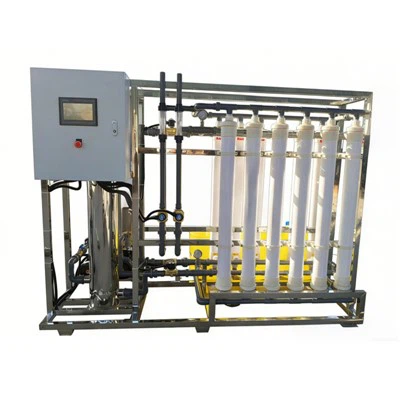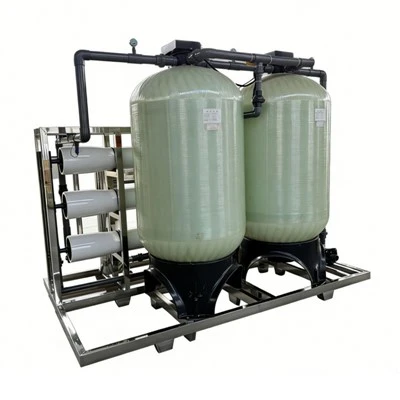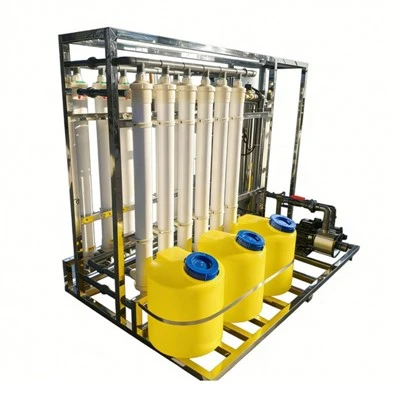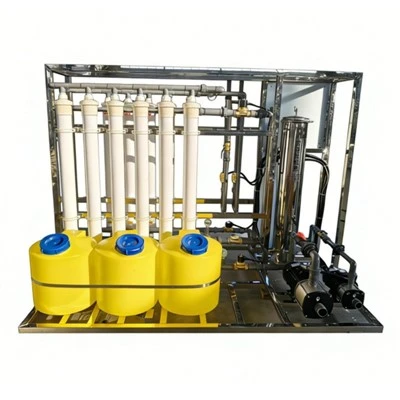

EDI (Electrodeionization) technology, with its continuous, efficient, environmentally friendly, and acid/alkali-free regeneration-free characteristics, has become a key technology for producing pure, high-purity, and ultrapure water in many industries with high water quality requirements. This technology is widely used in the pharmaceutical, electronics, power, and chemical industries.
In the semiconductor and electronics industry, EDI is used to produce ultrapure water for critical processes such as wafer cleaning and photolithography, producing water with a resistivity up to 18.25 MΩ·cm, meeting stringent standards such as GB/T 11446.1-2013 electronic-grade water and ASTM electronic-grade water. In the pharmaceutical and medical industry, EDI is used to produce purified water and water for injection (WFI) that meet standards of the Chinese Pharmacopoeia, United States Pharmacopeia (USP), and European Pharmacopoeia (EP), satisfying GMP and FDA regulations.
In the power and energy industry, EDI serves as a core purification device for boiler feedwater and chemical water treatment in power plants, stably producing high-purity water with a resistivity as high as 10-16 MΩ·cm, meeting the needs of demineralized water stations in large-scale thermal power plants and chemical cogeneration plants. In the chemical and petroleum industries, EDI is used for the preparation of deionized water in processes such as process water, circulating cooling water, fine chemicals, and surface treatment.
In the food and beverage industry, EDI is used for the preparation of production water and drinking water. In laboratories and research fields, EDI provides a stable and reliable source of high-purity water for various laboratories. Furthermore, EDI technology is also applied to the desalination of seawater and brackish water, serving as a post-treatment unit in reverse osmosis (RO) systems.
EDI technology is also used in the preparation of high-purity water in various industries, including biotechnology, daily chemical products, coatings, metal processing (such as electroplating), new energy (such as polysilicon production), and automotive, glass, steel, papermaking, and textile industries. In recent years, with increasing environmental protection requirements and technological maturity, EDI systems have been increasingly widely used in large-scale projects (such as those with a water production capacity of 1000-4000 tons/hour).