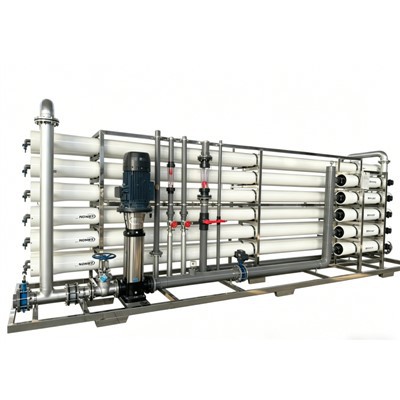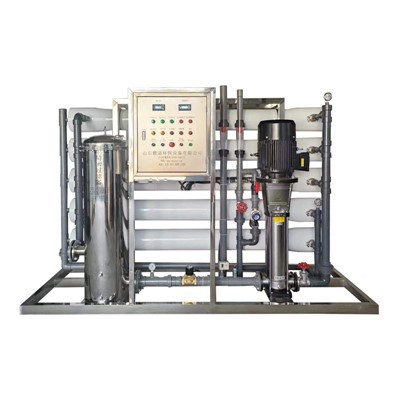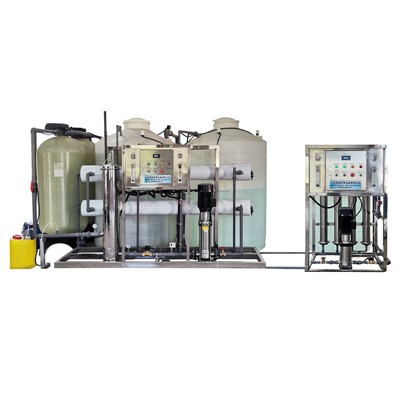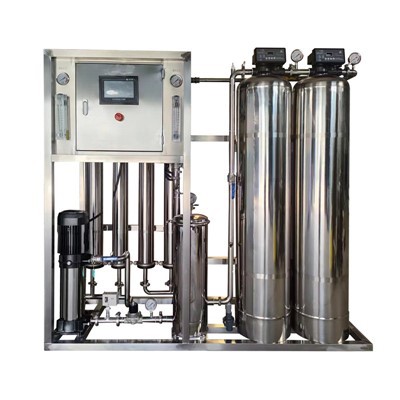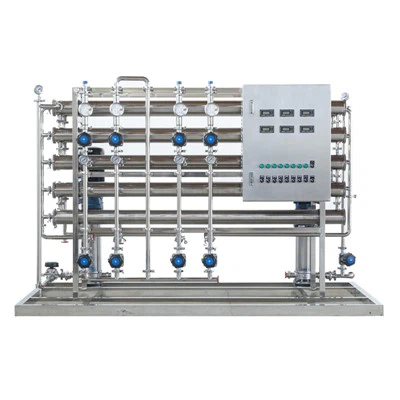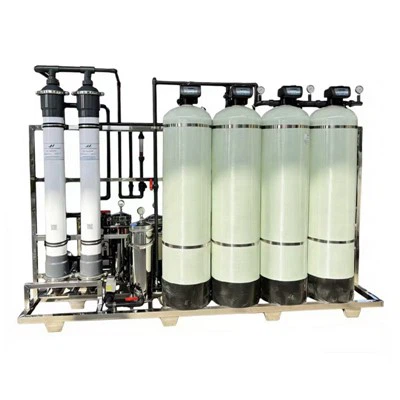

For EDI deionization water equipment, a skilled engineering designer is fundamental to ensuring stable operation. However, proper daily maintenance is equally important. Routine maintenance directly impacts the equipment's lifespan and the quality and quantity of produced water. Improper management can lead to frequent consumable replacements and high operating costs.
1. Maintain accurate operational records, carefully observing and recording the technical parameters of each node.
2. Although most equipment uses fully automatic intelligent control, regular inspections are still necessary.
3. Pay close attention to pretreatment equipment, regularly checking if the automatic cleaning system is functioning correctly and ensuring the effluent water quality meets standards (focusing on contamination index and ORP index).
4. Replace precision filter cartridges regularly; replace them promptly when the inner layer of the filter cartridge turns gray.
5. Continuously monitor the pressure, flow rate, and water quality indicators of the reverse osmosis unit during operation. Analyze and resolve any abnormalities promptly, and perform chemical cleaning when necessary.
6. For the EDI precision electro-deionization unit, pay attention to the technical parameters such as permeable water quality, inlet and outlet pressures for desalinated and concentrated water, operating voltage, and current. Regenerate and perform chemical cleaning promptly based on changes in these parameters.
7. For polishing resin filters, pay attention to the inlet water quality during daily management. Water that does not meet design requirements should not be introduced, otherwise it will fail too quickly.
8. Adhere to the principle that "if the effluent water quality of each treatment unit is not up to standard, it cannot enter the next treatment unit." Otherwise, it will increase the processing load of the next unit and cause irreversible damage.
For EDI deionized water equipment to operate stably, design and material selection are important, but subsequent maintenance is equally important and should be given due attention by users.