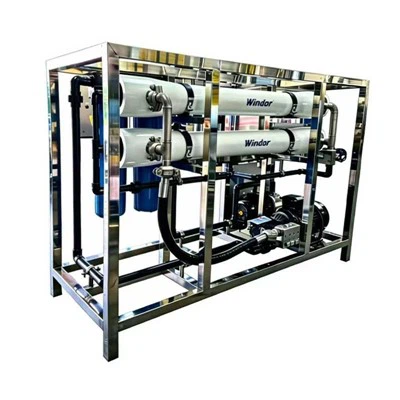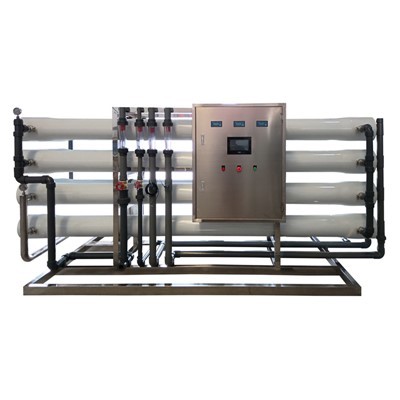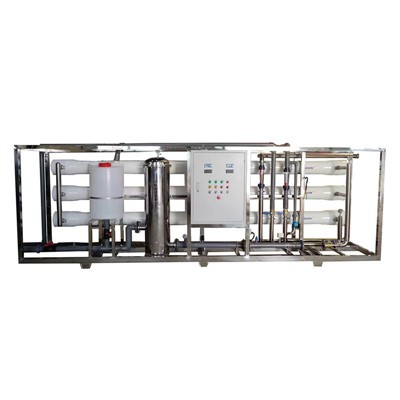


A Single Tank Water Softener System uses sodium-ion exchange resin to remove calcium and magnesium ions from incoming water. The system consists of an FRP pressure vessel, cation exchange resin, an automatic control valve, and a separate brine tank for resin regeneration.
During normal service, hard water passes through the resin bed, where calcium and magnesium ions are exchanged for sodium ions. The control valve initiates regeneration according to programmed water consumption or time-based settings.
This configuration is suitable for commercial facilities and light-industrial applications with intermittent or scheduled water demand. Unlike duplex softeners, a single-tank system normally interrupts softened water production during regeneration unless a separate bypass or alternative water supply is available.
Key Features
Automatic Regeneration Control: Metered or time-based control settings initiate regeneration according to water consumption or programmed intervals.
FRP Pressure Vessel: Fiberglass-reinforced polyester construction with a polyethylene inner liner provides the vessel structure for resin containment and water treatment.
Sodium-Form Cation Exchange Resin: Strong acid cation resin exchanges calcium and magnesium ions for sodium ions during normal service operation.
Multi-Stage Regeneration: The automatic control valve manages backwash, brine draw, slow rinse, fast rinse, and brine refill cycles.
Compact Single-Tank Configuration: Combines one resin vessel and a separate brine tank for installations with limited equipment space.
Technical Specifications
|
Parameter |
Specification |
|
System Type |
Single Tank Automatic Water Softener |
|
Peak Flow Rate |
3.5–5.0 m³/h (15–22 GPM) |
|
Working Pressure |
0.2–0.6 MPa (29–87 psi) |
|
Operating Temperature |
5–50°C (41–122°F) |
|
Pressure Vessel Diameter |
10–14 in |
|
Pressure Vessel Height |
44–65 in |
|
Resin Type |
Strong Acid Cation Exchange Resin, Sodium Form |
|
Resin Volume |
50–100 L |
|
Brine Tank Capacity |
100–200 L |
|
Inlet / Outlet Connection |
1 in or 1.25 in NPT / BSP |
|
Control Mode |
Automatic Metered / Time-Based |
|
Power Supply |
AC 110V / 220V, 50/60 Hz |
|
Controller Output |
DC 12V |
Applications
Commercial Boilers and Heating Systems: Supplies softened makeup water to compatible boilers, heat exchangers, and heating equipment to reduce calcium and magnesium scale formation.
Commercial Laundry Facilities: Reduces water hardness that can interfere with detergent performance and contribute to mineral deposits on fabrics and washing equipment.
Food and Beverage Processing: Provides hardness reduction for compatible equipment, including washing systems, heat exchangers, and selected process water pretreatment lines. Additional treatment may be required to meet ingredient water quality requirements.
Commercial Car Washes: Reduces calcium and magnesium hardness in washing water, helping limit mineral deposits on vehicle surfaces. Reverse osmosis or deionized water treatment may be required for final spot-free rinsing.
Working Principle
The system operates through sodium-ion exchange using strong acid cation resin.
Service Cycle: Hard water enters the pressure vessel and flows through the sodium-form resin bed. Calcium (Ca²⁺) and magnesium (Mg²⁺) ions are retained by the resin, while sodium (Na⁺) ions are released into the treated water.
Regeneration Cycle: When the programmed treatment capacity is reached, the control valve initiates regeneration:
Backwash: Reverse water flow expands the resin bed and flushes out accumulated suspended particles.
Brine Draw: Sodium chloride solution from the brine tank passes through the resin bed, displacing accumulated calcium and magnesium ions.
Slow Rinse: Water continues flowing through the resin bed to complete the regeneration process and carry displaced ions toward the drain.
Fast Rinse: Higher-flow rinsing removes residual brine and prepares the resin vessel for the next service cycle.
Brine Refill: The brine tank receives a measured volume of water to dissolve salt for the next regeneration cycle.
Softened water production is normally unavailable during regeneration in a single-tank configuration.
Customization Options
Control Valve: Optional Runxin, Fleck, or Autotrol control valves, depending on the selected configuration and regional availability.
Pressure Vessel: FRP vessels in different diameters and heights to accommodate resin volumes and installation requirements.
Electrical Configuration: AC 110V or 220V, 50/60 Hz power input with compatible DC 12V control power.
System Assembly: Optional skid-mounted configurations with connecting pipes, pressure gauges, and bypass valves.
Connection Standards: NPT or BSP threaded connections for compatibility with different piping systems.
FAQ
Q: How is the correct water softener size selected?
A: Selection depends on peak service flow rate, incoming water hardness, daily water consumption, and the required interval between regeneration cycles. Resin volume and working exchange capacity should be evaluated together.
Q: Does the system supply softened water during regeneration?
A: No. A standard single-tank system normally stops producing softened water during regeneration. Facilities requiring uninterrupted softened water should consider a duplex configuration or a separate backup supply.
Q: How often should the brine tank be refilled?
A: Salt replenishment depends on water consumption, inlet hardness, regeneration frequency, and the programmed salt dosage. The salt level should be inspected regularly and maintained according to the equipment operating instructions.
Q: Can the system treat well water containing iron?
A: Iron-containing water may require pretreatment before entering the softener. Iron concentration, oxidation state, and water chemistry should be evaluated to determine whether an iron-removal stage is necessary.
Request a Quote
Provide your required service flow rate, inlet water hardness, daily water consumption, installation space, and connection size to receive a suitable single-tank water softener configuration and quotation. Please also specify your preferred control valve, power supply, and whether regeneration downtime can be accommodated.
Hot Tags: single tank water softener system, China single tank water softener system manufacturers, suppliers, factory