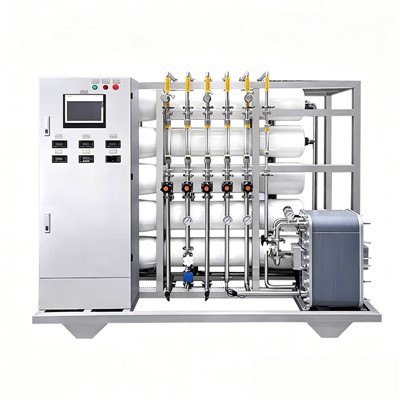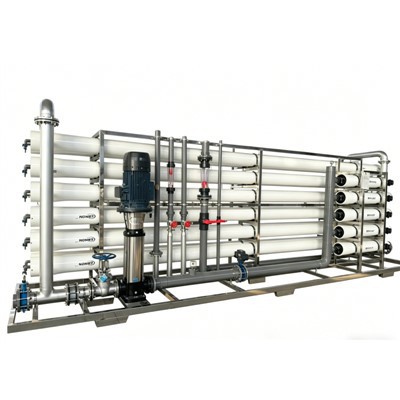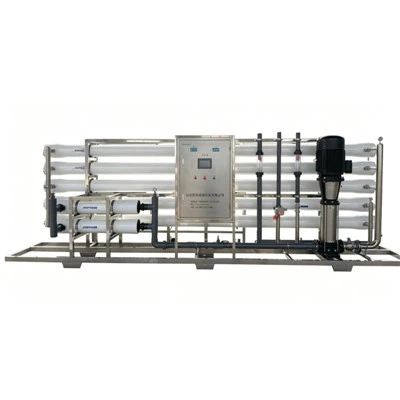


The Twin Alternating Water Softener System is an automatic dual-tank ion exchange system designed to provide continuous softened water for industrial and commercial applications. It uses two resin vessels connected to an alternating control valve. One tank supplies treated water while the other remains on standby or undergoes regeneration.
When the active resin bed reaches its programmed capacity, the control valve transfers the service flow to the second tank. The exhausted tank then enters the regeneration cycle and prepares for the next operating sequence. This configuration supports continuous soft water delivery during normal regeneration cycles without requiring the entire system to stop.
The system is suitable for industrial water treatment contractors, equipment distributors, boiler system suppliers, and commercial facilities requiring a continuous supply of softened water.
Key Features
Alternating Dual-Tank Operation: Two resin vessels operate in alternating service cycles, allowing one tank to supply water while the other regenerates.
Volumetric Regeneration Control: A water meter tracks consumption and triggers regeneration according to programmed capacity rather than relying exclusively on fixed time intervals.
FRP Pressure Vessels: Fiberglass-reinforced plastic tanks provide corrosion-resistant construction for standard water softening applications.
Automatic Control Valve: The integrated valve manages service, backwash, brine draw, rinsing, and tank switching sequences.
Strong Acid Cation Resin: Sodium-form ion exchange resin removes dissolved calcium and magnesium ions responsible for water hardness.
Technical Specifications
|
Parameter |
Specification |
|
Model Series |
TAS-Series |
|
System Configuration |
Twin-tank alternating |
|
Tank Quantity |
2 resin vessels |
|
Tank Diameter |
10–24 inches |
|
Tank Height |
48–72 inches |
|
Resin Volume |
50–300 L per tank |
|
Operating Flow Rate |
3.5–12.0 m³/h |
|
Inlet / Outlet Connection |
1–2 inches, NPT or BSP |
|
Operating Pressure |
0.2–0.6 MPa (2–6 bar) |
|
Water Temperature |
5–50°C |
|
Power Supply |
AC 100–240 V, 50/60 Hz |
|
Control Voltage |
DC 12 V |
|
Regeneration Control |
Metered immediate / metered delayed |
|
Regeneration Stages |
Backwash, brine draw, slow rinse, fast rinse, brine refill |
|
Resin Type |
Strong acid cation exchange resin, sodium form |
|
Tank Material |
FRP |
|
Control Mode |
Automatic alternating operation |
Applications
Boiler Makeup Water: Softens incoming water before downstream boiler feed water treatment to reduce calcium and magnesium hardness and limit scale formation.
Commercial Laundries: Supplies softened water to industrial washing machines and textile processing equipment where hardness control is required.
Cooling Tower Makeup Water: Reduces incoming hardness ions that contribute to mineral scale formation in cooling tower systems.
Food and Beverage Processing: Provides softened process water for equipment washing, container rinsing, and other applications requiring reduced water hardness.
Working Principle
The system operates through sodium-cycle ion exchange. Hard water containing calcium (Ca²⁺) and magnesium (Mg²⁺) enters the active tank and passes through a bed of sodium-form cation exchange resin. The resin exchanges sodium (Na⁺) ions for dissolved hardness ions, producing softened water at the outlet.
When the programmed treatment capacity is reached, the automatic control valve switches service to the standby tank. The exhausted tank then undergoes regeneration through the following stages:
Backwash: Water flows upward through the resin bed to loosen the media and remove accumulated suspended particles.
Brine Draw and Slow Rinse: Sodium chloride solution passes through the resin bed, restoring sodium ions to the exchange sites. Slow rinsing removes displaced hardness ions and residual brine.
Fast Rinse: Water flushes remaining regeneration solution from the resin bed.
Brine Refill: Water replenishes the brine tank for the next regeneration cycle.
The control valve coordinates tank alternation and regeneration according to the programmed operating sequence.
Customization Options
Pressure Vessel Materials: FRP vessels for standard water treatment applications, with SS304 or SS316 stainless steel vessel configurations available for suitable project requirements.
Control Systems: Hydraulic or electronic automatic control valves, with digital metered regeneration options.
Brine Tank Capacity: Polyethylene brine tanks in 100 L, 200 L, 300 L, 500 L, and 1,000 L configurations.
System Integration: Skid-mounted assemblies with integrated piping, valves, and electrical connections.
Resin Configuration: Resin volume and tank sizing selected according to feed water hardness, required flow rate, and regeneration frequency.
FAQ
Q: Can the system supply softened water during resin regeneration?
A: Yes. The standby tank takes over service while the other tank regenerates, provided the standby tank has sufficient treatment capacity for the required flow and operating conditions.
Q: What factors determine the system capacity?
A: Capacity depends on resin volume, incoming water hardness, resin exchange capacity, salt dosage, and regeneration frequency. Flow rate and outlet hardness requirements must also be considered during selection.
Q: Does the system require electricity?
A: Electronic control configurations require an electrical supply. Hydraulic control valves can operate without an external electrical power supply.
Q: Can the system be integrated into an existing water treatment line?
A: Yes. Connection sizes, control arrangements, and skid configurations can be selected to match the existing piping and treatment process.
Request a Quote
To select a suitable Twin Alternating Water Softener System, provide the following project information:
- Average and peak water flow rate (m³/h).
- Raw water total hardness (mg/L as CaCO₃).
- Required outlet water hardness (mg/L as CaCO₃).
- Daily water consumption and operating hours.
- Available inlet pressure and power supply.
- Installation space and pipe connection sizes.
- Preferred tank material and control configuration.
These details help determine resin volume, vessel dimensions, regeneration settings, and system configuration.
Hot Tags: twin alternating water softener system, China twin alternating water softener system manufacturers, suppliers, factory